
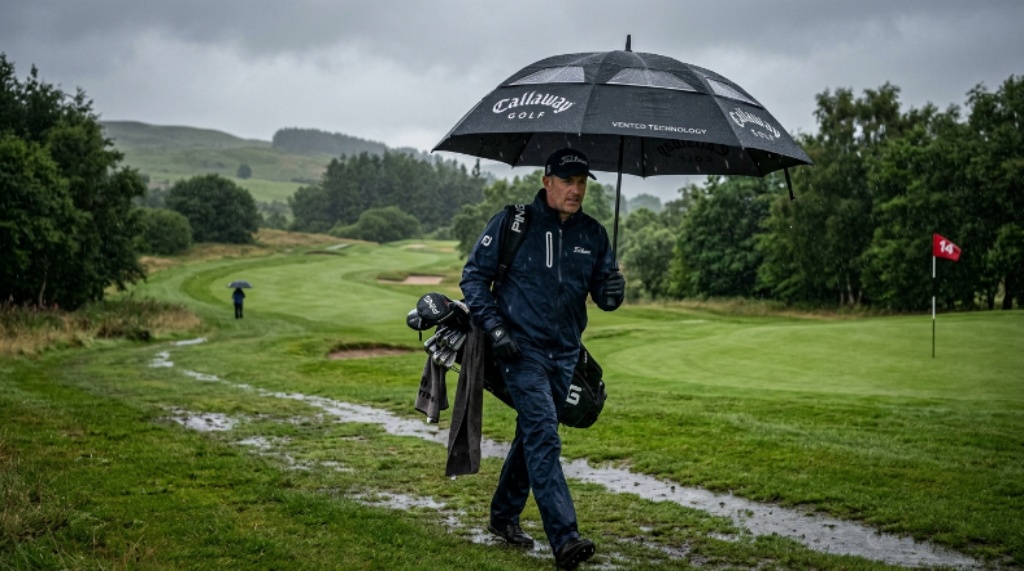
Golf is an outdoor sport with no roof over your head. Rain, wind, and sun can all arrive without warning. When the weather turns, a quality umbrella becomes one of the most important items in your bag. However, not all golf umbrellas are built the same. Standard umbrellas snap in the wind, drip through the canopy, and fall apart within a season. Heavy-duty golf umbrellas, on the other hand, are designed to handle real conditions on the course. This article explains why investing in one is a decision that pays off round after round.
The Problem with Ordinary Umbrellas on the Golf Course
Most people own a basic umbrella. It works fine for a short walk in light rain. However, take that same umbrella onto a golf course and the problems become obvious very quickly.
Golf courses are exposed environments. There are no buildings or trees to block the wind. A standard umbrella catches that wind like a sail. The frame buckles, the canopy inverts, and within minutes the umbrella is useless. Additionally, ordinary canopies are not large enough to protect both you and your equipment at the same time.
Golfers face a specific set of challenges that casual umbrella users do not. They need protection from rain, wind, and sun across several hours. They also need to keep their clubs and bag dry. A flimsy umbrella simply cannot handle all of that. Therefore, a purpose-built heavy-duty option is the only sensible choice for anyone who plays regularly.
What Makes a Golf Umbrella Heavy-Duty
The term “heavy-duty” is not just a marketing label. It refers to specific design features that make a golf umbrella genuinely stronger and more reliable than standard models.
Here are the core features that set heavy-duty golf umbrellas apart:
- Frame construction: The shaft and ribs are made from reinforced materials designed to resist bending and snapping under pressure.
- Canopy size: Golf umbrellas are larger than standard models, typically ranging from 60 to 68 inches across. This size covers both the golfer and the golf bag.
- Canopy design: A double-layer or vented system allows wind to pass through rather than building up pressure.
- Handle grip: A rubberised or ergonomic handle reduces hand fatigue during long rounds.
- Auto-open mechanism: A reliable spring-loaded opening system saves time and keeps you dry faster.
Each of these features contributes to an umbrella that holds up under pressure. Together, they create a product that performs season after season.
The Case for a Fiberglass Shaft Umbrella
The shaft of a golf umbrella is the backbone of the entire structure. Most cheap umbrellas use thin metal or plastic shafts that bend or snap when the wind picks up. A fiberglass shaft umbrella solves this problem entirely.
Fiberglass is lightweight yet incredibly strong. It flexes under pressure without breaking. This is exactly what you want in a golf umbrella shaft. When a gust of wind hits the canopy, a fiberglass shaft absorbs the force and springs back to its original position. A metal shaft, by contrast, often bends permanently or snaps outright.
Additionally, fiberglass does not rust. Metal shafts can corrode over time, especially in wet climates where a golf umbrella sees frequent use. A fiberglass shaft umbrella therefore lasts longer and maintains its structural integrity across many seasons. For golfers who play year-round, this durability translates directly into long-term savings.
Furthermore, fiberglass shafts are non-conductive. This is an important safety feature on a golf course, where players are exposed to open skies during thunderstorms. Reducing the risk of electrical conductivity is a genuine practical benefit that many golfers overlook when choosing an umbrella.
Why a Vented Canopy Umbrella Is a Game Changer
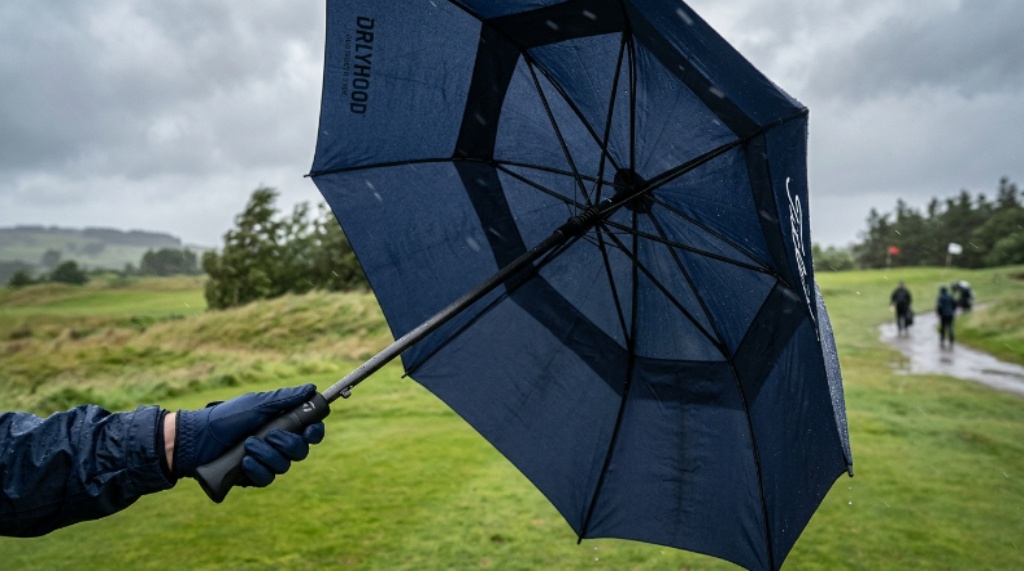
Wind is the biggest enemy of any umbrella. Traditional single-layer canopies trap wind underneath, creating pressure that flips the umbrella inside out or strains the frame to its breaking point. A vented canopy umbrella handles this problem with an elegant solution.
A vented canopy features a gap or double-layer panel near the top of the canopy. When wind pushes up from below, the air escapes through the vent instead of building up pressure. This dramatically reduces the force the frame has to absorb. The result is an umbrella that stays open and stable even in strong gusts.
For golfers, this makes a real difference. A round of golf takes several hours. During that time, wind conditions can change significantly. A vented canopy umbrella stays reliable through those changes. You do not have to fight to keep it open or worry about it flipping every time the wind picks up.
Additionally, the double-layer design of many vented canopies adds a layer of rain protection. Water is less likely to penetrate a two-layer canopy than a single one. Therefore, you stay drier even during heavier rainfall.
Coverage That Protects You and Your Equipment
One of the most overlooked reasons to invest in a heavy-duty golf umbrella is sheer size. A large canopy does not just protect you from the rain. It also protects your golf bag, clubs, and accessories.
Wet club grips are harder to hold. Wet gloves lose their grip entirely. Waterlogged bags become heavy and difficult to carry. A wide umbrella canopy keeps all of these things dry when you are standing still between shots or waiting on the tee.
However, size alone is not enough. The canopy needs to be positioned correctly. Many heavy-duty golf umbrellas feature a tilting handle or adjustable angle. This lets you angle the canopy into the wind or sun as needed. Therefore, you get maximum coverage without having to awkwardly crane the umbrella in one direction.
Durability That Justifies the Cost
Heavy-duty golf umbrellas cost more than basic models. That is simply true. However, the cost comparison changes significantly when you factor in lifespan.
A cheap umbrella might last one season or less. A quality heavy-duty model, with proper care, can last five to ten years. When you divide the cost across that many years of use, the annual expense becomes very reasonable.
Additionally, replacing a broken umbrella mid-round is not possible. When a standard umbrella fails in the rain, you are left exposed for the rest of your game. The reliability of a quality umbrella has real practical value that goes beyond the price tag.
Consider also what you are protecting. Golf equipment is not cheap. Clubs, bags, and accessories represent a significant investment. Keeping them dry and in good condition extends their lifespan too. Therefore, a heavy-duty umbrella is not just protecting you. It is protecting everything you bring to the course.
Choosing the Right Heavy-Duty Golf Umbrella
With so many options available, knowing what to prioritise makes the selection process easier.
Start with the shaft. Look for a fiberglass shaft umbrella if wind resistance and durability are your top concerns. Next, check the canopy. A vented canopy umbrella is the better choice for windy conditions, which describes most open golf courses.
Consider the canopy diameter. Anything under 60 inches may struggle to cover both you and your bag. A 62 to 68 inch canopy is the sweet spot for most golfers. Also check the weight. A heavy-duty umbrella should still be light enough to carry comfortably for an entire round.
Finally, look at the handle. A comfortable grip matters more than most people realise. A long rubber-handled grip gives you better control in wet conditions and reduces hand strain over several hours of use.
Conclusion
A heavy-duty golf umbrella is not a luxury item. It is a practical piece of equipment that every regular golfer benefits from owning. Ordinary umbrellas simply cannot handle the wind, rain, and duration that a round of golf demands. A fiberglass shaft umbrella offers the strength and flexibility to survive strong gusts without bending or breaking. A vented canopy umbrella provides stability in windy conditions by allowing air to escape rather than build up pressure.
Additionally, the size and coverage of a heavy-duty model protects your clubs, bag, and gear as well as yourself. The upfront cost is higher than a basic umbrella, but the durability and long-term value make it a smart investment. Therefore, if you play golf with any regularity, upgrading to a heavy-duty umbrella is one of the simplest and most effective improvements you can make to your on-course experience.
Frequently Asked Questions
What size golf umbrella do I need?
Most golfers benefit from a canopy diameter of 62 to 68 inches. This size is large enough to cover both the golfer and a golf bag while still being manageable to carry across the course.
Are fiberglass golf umbrellas safe during lightning?
Fiberglass is non-conductive, which makes it safer than metal shaft umbrellas during electrical storms. However, it is always best to leave the course and seek shelter when lightning is present, regardless of the umbrella you carry.
How does a vented canopy help in windy conditions?
A vented canopy allows wind to pass through a gap or double-layer panel near the top of the umbrella. This reduces the air pressure that builds up underneath and prevents the canopy from inverting or collapsing in strong gusts.
How long should a quality golf umbrella last?
A well-made heavy-duty golf umbrella, when stored properly and used with care, can last between five and ten years. Cheaper models often fail within a single season of regular use.
Can I use a golf umbrella for everyday use?
Yes, absolutely. The same features that make golf umbrellas reliable on the course — large canopy, strong frame, and wind resistance — also make them excellent for daily use in all kinds of weather.