
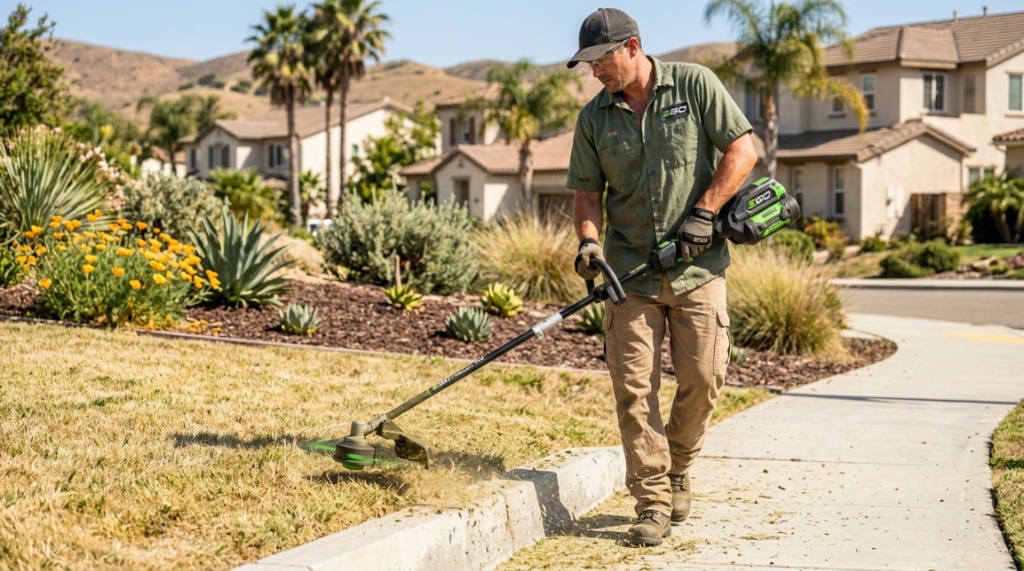
If you live in California, choosing the right cordless string trimmer involves more than just picking the most powerful model on the shelf. You have to factor in fire season restrictions, air quality rules, battery range for larger properties, and the specific types of vegetation common in your region. With so many options available, comparing cordless string trimmers for California can quickly become overwhelming. This guide breaks down the key comparison points, practical trade-offs, and California-specific considerations you need to make a confident purchase—without getting lost in marketing jargon or irrelevant specs.
Key Takeaways
- Battery voltage (40V vs. 80V) matters less than amp-hour (Ah) capacity for runtime; think of Ah as the size of the fuel tank.
- California’s dry climate and fire regulations often make brushless motors a safer, more reliable choice due to lower heat generation and longer lifespan.
- Look for trimmers with dual-line bump heads and “reverse” features, which handle tough, dry weeds more effectively than standard single-line models.
- Consider local air quality rules: you do not need a permit for battery-operated trimmers, but they still require responsible maintenance, especially during high fire danger periods.
- Always check the manufacturer’s declared “run time under load” rather than idle time, as cutting thick, dry grass drains batteries roughly 30% faster than light trimming.
Why California Has Unique Trimmer Requirements
California is not just one climate zone. From the foggy coastal areas to the hot Central Valley and the dry Sierra foothills, the landscaping challenges vary immensely. However, all these regions share one common trait: a heightened risk of wildfire and strict emissions regulations. Unlike gas-powered models, which are increasingly restricted, you are looking for a battery-powered solution. The main comparative factors for cordless string trimmers for california are not just raw power, but efficiency, runtime, and how well the unit handles dry, brittle vegetation.
Gas trimmer restrictions in many air districts (like the South Coast AQMD) make cordless models the practical default. But comparing them requires a different lens than you might use elsewhere. You are not just asking “is it strong enough?” You are asking “can it finish this job on one charge without overheating during a 90-degree day?” and “will it survive a dry season with minimal breakdowns?”
Key Specifications to Compare Before Buying
When you start comparing models, the spec sheet can be misleading. Here is what actually matters for performance in California yards, and what you can safely ignore.
Voltage vs. Amp-Hours: What Actually Determines Runtime
Voltage (V) is often marketed as the “power” number, but it is only half the story. A 40V trimmer with a high amp-hour (Ah) battery can often out-work a lighter-duty 80V model with a small battery. For comparison purposes, calculate the watt-hours (Wh): multiply voltage by amp-hours. For example, a 40V × 5Ah battery gives you 200 watt-hours, which is roughly equivalent to a 40V × 5Ah battery from another brand. However, higher voltage systems (like 80V) typically push more torque to the head, which is noticeable when cutting thick, dry blackberry vines or old grass.
In practical terms for California:
- Small yards (under ¼ acre): 18V to 40V systems with a 2Ah–4Ah battery are sufficient for typical edging and light grass trimming.
- Medium properties (¼ to ½ acre): 40V to 80V systems with a 4Ah–6Ah battery are recommended. You will need the higher capacity to avoid swapping batteries mid-job.
- Large properties (over ½ acre): Look for 80V or 82V systems with a 6Ah battery or higher, and consider buying a second battery. This is the most common mistake I see in consumer reviews—people underestimate how much battery dry grass consumes.
Brushless Motors: A Must-Have for Reliability
Always compare models with a brushless motor versus a brushed motor. In California’s dusty, dry conditions, a brushless motor is not just a premium feature; it is a reliability factor.
A brushless motor has no physical brushes to wear out, so it generates less heat and maintains torque even under heavy load. This is critical when you are pushing the trimmer through tall, sun-baked weeds that would bog down a weaker motor. While most mid-range models now use brushless motors, some budget trimmers still use older brushed technology. If a comparison chart does not explicitly state “brushless,” assume it is brushed and move on.
Line Advancement System: Speed vs. Convenience
This is an overlooked spec. California’s dry grass tends to snap line faster than wet grass. You will be bumping the head on the ground frequently.
- Single-line bump feed: Cheaper and lighter, but you stop more often.
- Dual-line bump head (e.g., PowerLoad or Rapid Load): Better for larger areas because it cuts a wider swath and reduces line changes.
- Auto-feed (wind and feed): These are often more finicky in dry conditions. The line can weld to the spool in high heat. For California, a simple, reliable bump feed is often preferable to automatic systems.
Battery Considerations Specific to California
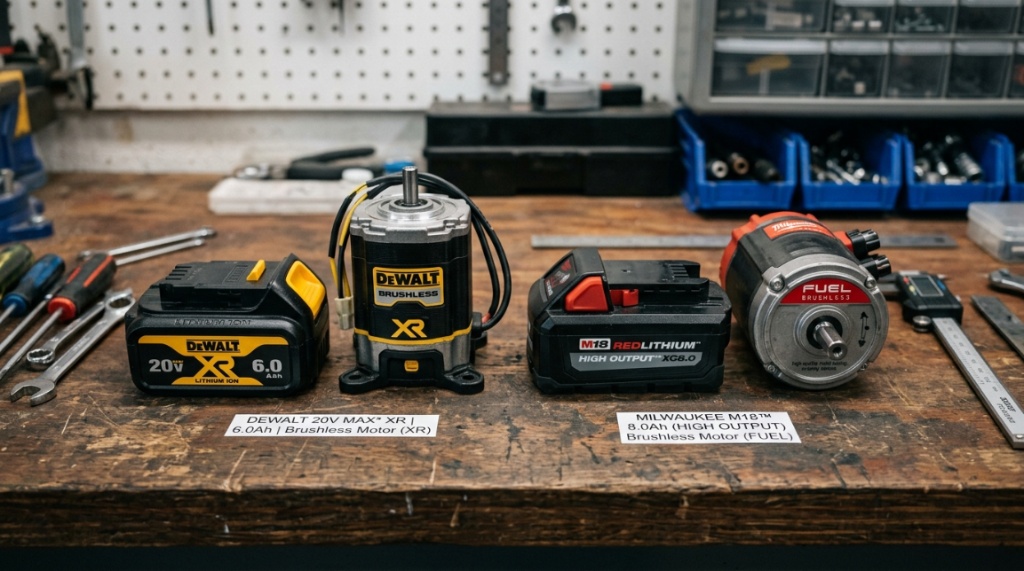
Battery tech has improved, but the heat in California can still degrade performance. Comparing only “maximum runtime” is misleading. You need to compare “runtime under load at 80°F+.”
Runtime Tests vs. Real-World Use
Manufacturers test runtime with the trimmer running at low speed without cutting anything. Real-world cutting—especially thick, dry grass—draws more current, reducing runtime by 25% to 40%. When you compare models, look for tests that state “under load” or “high speed.” If not available, estimate that a quoted 40-minute runtime translates to about 25 minutes of actual heavy trimming. Then check if that is enough for your yard.
Heat Management and Charging
Leaving a lithium-ion battery in a hot car or direct sunlight can permanently reduce its capacity. For California, compare whether the charger has a thermal sensor that slows down charging in high heat. Some premium chargers also have a “storage mode” that is helpful if you do not use the trimmer for months. More importantly, look for a tool with a battery that is easily removable. Built-in batteries in trimmers are a dealbreaker for many Californians because you cannot swap in a spare when the day heats up.
Battery Ecosystem and Cross-Compatibility
When comparing different brands, consider if the battery is shared with other tools (like blowers or chainsaws). This is not a technical spec, but it is a practical factor. A 80V battery that works in a trimmer and a pole saw is more valuable than a proprietary one. It reduces the total cost of ownership and is more useful for property maintenance.
Assessing Torque and Cutting Power for Dry Vegetation
A common complaint from new users is that a trimmer “stalls” in tall, thick, dry grass. This is not always about voltage—it is about torque.
Compare the “cutting swath” width. A wider swath (15 inches or more) covers more ground but requires more torque to turn the line through heavy weeds. A narrower swath (12–13 inches) is easier to power but takes longer.
More importantly, check if the trimmer has a “high-torque” mode or a speed control that adjusts to the load. Some models have an automatic load-sensing feature that increases torque when the line hits thick vegetation. In California, where grass can be dry and fibrous, this feature is more useful than a high top speed. If two trimmers have the same voltage, the one with a dedicated “high-torque” setting or a lower gear ratio will perform better for clearing weeds.
Weight and Ergonomics: Avoiding Fatigue on Sloped Terrain
Many California properties have slopes, which requires you to hold the trimmer at awkward angles. Comparing only weight in pounds is insufficient. Look for the balance point—where the center of gravity sits relative to your hands.
Battery placement significantly affects balance. Rear-mounted batteries (where the battery slides into the back of the unit) shift the weight to your back hip, reducing wrist strain but making the unit feel heavier overall. Mid-mounted batteries (like those on many EGO models) distribute weight more evenly. For sloped terrain, a mid-mounted battery is preferable because it keeps the front end lighter, allowing you to guide the cutting head with less effort.
Also, compare the handle adjustability. A rotating handle (that allows you to flip the cutting head 180 degrees) is very useful for edging along driveways, which is common in suburban California. This is not a spec that shows in the power numbers but is crucial for daily comfort, To elevate your yard’s overall aesthetic and layout beyond just lawn care, learn garden sculptures can shape the landscape.
Durability and Protection Against Dust and Debris
California’s soil is often dry and dusty, especially in the inland valleys. A trimmer’s motor housing needs to be sealed to prevent dust from being sucked into the cooling fan.
Compare the “IP rating” (Ingress Protection). An IPX4 rating means it is splash-proof, which is standard. But for dry dust, look for models that advertise “dust-sealed” or “brushless motor with sealed bearings.” In my research, the most common failures in battery trimmers in dry climates are not from impact but from abrasive dust grinding down the motor shaft seals. Paying a little more for a model with sealed ball bearings at the cutting head is a smart investment for multi-year reliability.
Warranty as a Comparison Metric
Battery-powered tools in high-heat environments have a higher failure rate. So, compare the warranty terms. A 5-year warranty on the tool and a 3-year warranty on the battery is considered good. Some brands like EGO offer 5-year tool warranties, while others offer only 2 years. This is a significant “information gain” that is often ignored in generic top-10 lists.
Common Mistakes to Avoid When Comparing
Here are the practical pitfalls I consistently see in consumer reviews and local buying guides:
- Overlooking “handedness”: Most trimmers are designed for right-handed users, but some offer reversible handles or a slide-switch to convert the cutting head direction. If you are left-handed, this is vital.
- Ignoring the guard size: A larger guard protects your plants and windows but makes the head heavier. For trimming along a fence or a French drain, a smaller guard is easier to maneuver.
- Forgetting about the auxiliary handle placement: Some handles are fixed, while others are adjustable. On a slope, you want to move the auxiliary handle to a low position to keep the trimmer lower without bending over.
- Not checking the noise level: Many California cities have noise ordinances, especially in the morning. Brushless trimmers are generally quieter (around 85-90 dB), but some cheaper models still produce over 100 dB, which can be a nuisance.
Cost vs. Value: What You Are Paying For
Comparing price is not about finding the cheapest. In California, the “cheapest” trimmer often ends up costing more due to shorter battery life and premature motor failures.
Break down the cost per use. A $200 trimmer with a 2Ah battery that barely finishes a quarter-acre lot might last 2 years. A $350 trimmer with a 6Ah battery and brushless motor might last 8 years. The value is clear when you calculate the cost per year of service. Moreover, consider the cost of a spare battery. For California use, a spare battery is not optional—it is a necessity. So, in your comparison, include the cost of an extra battery. Sometimes the “bare tool” (without battery) is significantly cheaper if you already own the battery platform.
Frequently Asked Questions
Can I use any cordless string trimmer during California’s fire season?
Yes, battery-operated trimmers are generally allowed during fire season, unlike gas-powered ones, which may be restricted on high-risk days. However, you should check local county restrictions (like CalFire’s rules), as some areas may have “no mowing” advisories during extreme heat and wind events. Always clear dry grass away from metal blades (if attached) to prevent sparks from hitting rocks.
What is the best battery voltage for a string trimmer in California?
For most residential lots, 40V is sufficient for light edging and grass. For larger properties with thick, dry weeds, an 80V system provides more torque for a similar runtime. However, higher voltage systems are heavier and more expensive. The best voltage depends on your property size and density of vegetation, not just state location.
What is the difference between a 40V and 80V trimmer?
The voltage difference mainly translates to maximum power capacity and torque. An 80V trimmer can maintain higher cutting speed under load, making it more effective on thick, dry brush. A 40V trimmer is lighter and cheaper but may struggle with dense, overgrown weeds. The battery amp-hour (Ah) matters just as much—a 40V × 6Ah can outlast an 80V × 2.5Ah.
Do I need a special trimmer for hills or slopes?
Yes, look for a model with a rotating auxiliary handle and a shoulder strap. These features help you change angles without straining your back. Also, a heavier gauge line (0.080” or 0.095”) will cut better on slopes without tool bogging. A bump-feed head is easier to use on uneven terrain than a fixed-line head.
How long does a cordless trimmer battery last per charge?
A typical 40V, 4.0Ah battery lasts about 20-35 minutes of continuous heavy trimming. Under light grass, it can last up to 50 minutes. For a half-acre lot, plan on needing at least two 4.0Ah batteries or one 6.0Ah battery. Heat reduces runtime by about 20%.
Conclusion
Comparing cordless string trimmers for California does not have to be complicated if you focus on the right metrics. Do not just look at peak horsepower or the number on the box. Instead, evaluate the amp-hour capacity, brushless motor quality, how the weight balances on slopes, and the warranty that protects you from dust and heat damage. Remember that a smaller, lighter, 40V model can be the perfect choice for a city lot with minimal weeds, while a larger 80V system is worth the investment for rural properties or those with thick, dry brush. Start with your property size, then look for a reliable battery platform that supports additional tools. With these criteria in mind, you can confidently choose a trimmer that will handle California’s unique conditions and last for many seasons.

