
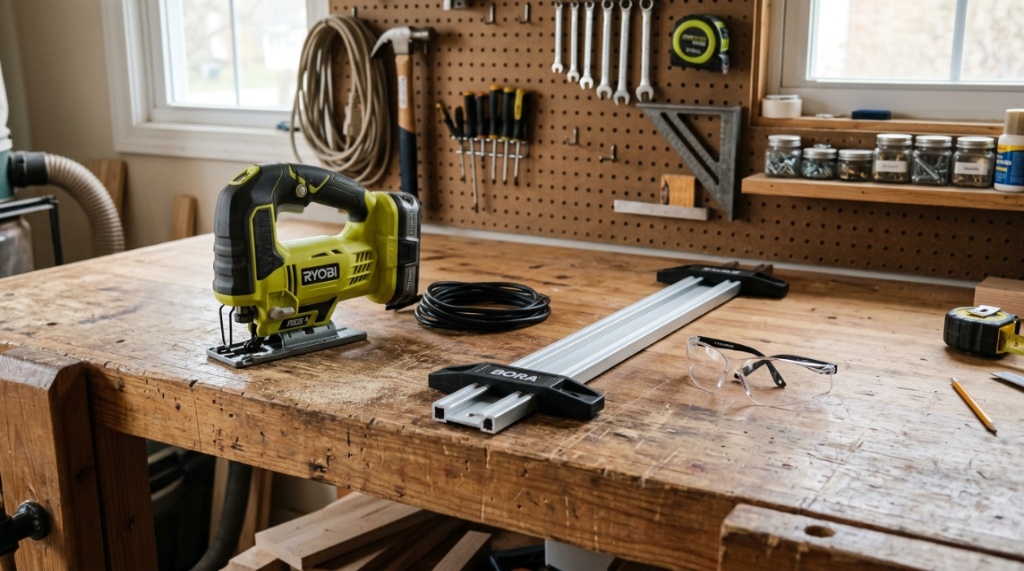
You just bought an affordable jigsaw, but the cuts look like they were made by a chainsaw on a hangover. The blade wanders, the wood splinters, and the line you drew looks more like a suggestion than a guide. You are not alone. The problem isn’t always the tool; it is often the technique. With the right approach, you can achieve remarkably smooth cuts cheap jig saw tools can produce. This guide will teach you the specific adjustments, blade choices, and cutting methods that transform a budget tool into a precision cutter.
Why Does My Cheap Jigsaw Cut Roughly?
A rough cut happens when the blade vibrates, deflects, or tears the material instead of slicing it. Cheap jigsaws often have less power and more play in the mechanism, which amplifies user error. You can counteract these limitations by understanding the physics of the cut and preparing your tool correctly.
The Role of Blade Flex and Tooth Count
Budget saws typically come with a low-quality, coarse blade. This blade flexes under pressure, especially on thicker wood. The solution is to select a blade with more teeth per inch (TPI). A 10–12 TPI blade designed for clean crosscuts will stabilize the cut and reduce tear-out significantly.
How Vibration Affects Your Cut Quality
Vibration is the enemy of smoothness. Cheap saws vibrate more because of lighter construction and less balanced motors. You can dampen this vibration by using a zero-clearance insert on your workbench or by clamping the workpiece firmly. A stable base prevents the saw from dancing across the surface.
Why You Might Be Pushing Too Hard
Many beginners lean into the saw, hoping it will cut faster. This forces the blade to bend, creating a beveled edge. Let the saw do the work. A cheap jigsaw cuts best when you guide it gently. Forcing it increases friction and heat, which dulls the blade and roughens the surface.
What Is the Best Blade for a Cheap Jigsaw?
The blade is the single most important factor in achieving smooth cuts. A high-quality blade on a cheap saw will outperform a cheap blade on an expensive saw. Invest in good blades immediately; they cost a few dollars and transform your results.
Choose Downward-Cutting Blades for Clean Tops
Standard blades cut on the upstroke, which lifts wood fibers and causes splintering on the top surface. A down-cut blade reverses this action, pulling the fibers downward. This leaves a clean edge on the visible side of your workpiece, which is ideal for furniture or visible trim work.
Match the Blade to the Material
You need different blades for wood, plastic, and metal. For wood, use a ground tooth blade (not milled). For thin plywood, use a blade with 12–14 TPI to avoid chipping the veneer. Always check the shank type; T-shank blades offer better grip and less wobble than U-shank blades in most cheap saws.
The Impact of Blade Length
A blade that is too long will whip and vibrate more. Use the shortest blade that can still cut through your material thickness. For 3/4-inch plywood, a 3-inch blade is sufficient. Cutting with a longer blade than necessary introduces unnecessary flex and ruins your smooth cuts cheap jig saw attempts.
How Do I Stop My Jigsaw from Splintering Wood?
Splintering primarily occurs when the blade exits the wood. The fibers on the bottom side of the cut have no support and blow out. You can prevent this by using simple anti-splintering techniques that require no special tools.
Use Painter’s Tape as a Sacrificial Layer
Apply a strip of standard painter’s tape directly over your cut line. The tape holds the wood fibers together as the blade passes through. This is the cheapest and most effective hack for preventing top-surface splintering. Peel the tape off after the cut for a pristine edge.
Score the Cut Line First
Use a utility knife to score the wood surface along your cut line. Cut about 1/8-inch deep. This severs the surface fibers, so when the blade passes, it cuts cleanly rather than tearing. This technique is especially effective on plywood with fragile veneer layers.
Before making your cuts, ensure your setup is properly aligned by checking out our guide on how to set up a Workshop with the Best Cordless Power Tools to enhance your DIY projects.
Clamp a Sacrificial Board Underneath
When the blade exits the bottom of your workpiece, it needs support. Clamp a scrap piece of plywood or MDF under your workpiece. The blade cuts through both pieces, but the scrap board prevents the bottom fibers from blowing out. This single trick eliminates nearly all bottom-side splintering.
How Fast Should I Set the Speed on a Cheap Jigsaw?
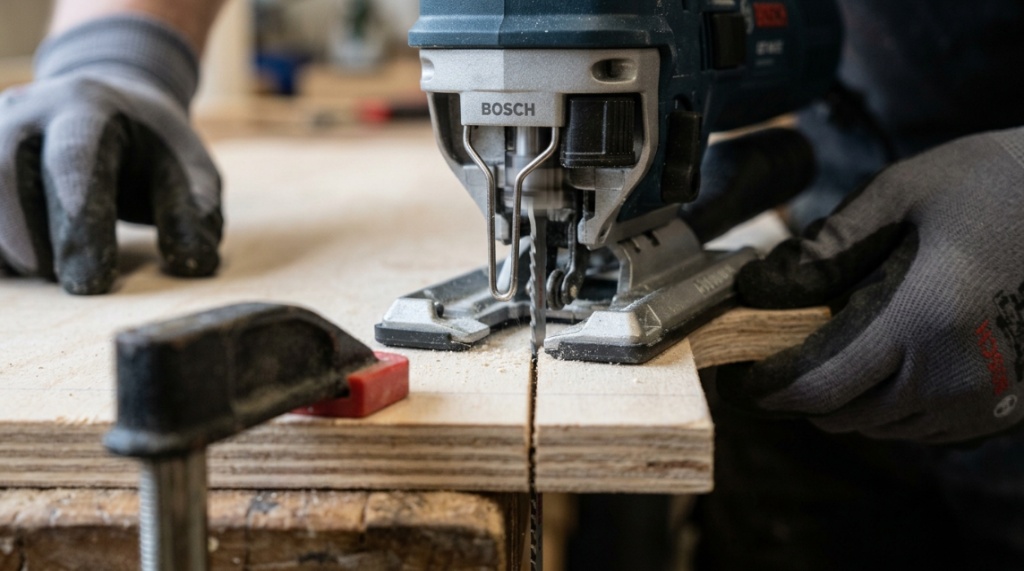
Most cheap jigsaws come with a variable-speed trigger. Using the right speed for your material prevents burning, melting, or chipping. In general, slower speeds are better for harder materials, and faster speeds work well for softer materials.
Speed Settings for Different Materials
| Material | Recommended Speed | Reason |
|---|---|---|
| Softwood (Pine) | High (6–8) | Prevents burning on fast cuts |
| Hardwood (Oak) | Medium (4–6) | Reduces blade wear and burning |
| Plywood | Medium-High (5–7) | Balances speed and chip control |
| Plastic (Acrylic) | Low (1–3) | Prevents melting |
| Metal | Low (1–3) | Prevents overheating blade |
Why Orbital Action Needs to Be Off
Orbital action makes the blade move in an aggressive forward stroke, which cuts faster but creates a rougher finish. For smooth cuts, set the orbital action to zero or the lowest setting. This forces the blade to cut straight up and down, giving you a cleaner edge at the cost of speed.
The Rule of Finger Pressure
Your finger on the trigger should feel like you are petting a cat. A light, steady squeeze maintains consistent blade speed. Gently reduce pressure when you hear the motor struggling. Let the blade stabilize at the chosen speed before starting the cut.
Which Cutting Technique Prevents Blade Drift?
Blade drift occurs when the jigsaw veers off your intended line. This is common in cheap saws due to guide play. You can correct drift by adjusting your body position and how you guide the saw, rather than fighting the tool physically.
Keep the Saw Base Flat at All Times
If the saw base lifts, even slightly, the blade will twist. Maintain constant, even pressure on the base with your free hand. Do not tilt the saw to follow a curve. Instead, pivot the entire tool using the base as a stable platform.
Use a Rip Fence or Straight Edge Guide
For long straight cuts, clamp a straight board to your workpiece. Press the saw base against this guide as you cut. This eliminates the need for perfect freehand control and counters the natural drift of a budget saw. It is the fastest path to professional-looking straight lines.
Cut on the Waste Side of the Line
Always position your blade on the waste side of your cut line. This gives you a margin for error. If the blade drifts, you can correct it without ruining your final piece. Focus on guiding the saw, not on perfectly following the line with your eyes.
How Do I Make Curved Cuts Smoothly?
Curved cuts are where cheap jigsaws struggle the most. The blade wants to go straight, and forcing it to turn can cause binding and kickback. You need to help the saw turn by giving it space and using the right approach angle.
Drill Relief Holes for Tight Curves
For tight radius curves, drill a small hole (1/4-inch) near the corner of your cut line. Cut straight into the hole, then back out and approach from the opposite direction. This relieves pressure on the blade and prevents it from binding or breaking in tight turns.
Make Multiple Small Relief Cuts
Before cutting the final curve, make several straight cuts into the waste area, stopping just short of your line. These cuts act as release points. As you follow the curve, the waste pieces fall away, reducing blade resistance and allowing for a smoother turn.
Slow Down on the Arc
Reduce your forward speed by about half when entering a curve. Let the blade cut at the outer edge of the curve while you pivot the saw from the rear. If you hear the motor strain, you are turning too tight too fast. Back off and let the blade reset.
Can I Fix a Rough Cut After It’s Done?
Yes, you can salvage a rough cut with simple finishing techniques. While it is better to get it right the first time, knowing how to clean up a bad edge saves projects and reduces waste. These methods work well on wood and plastic.
Sand the Edge with a Block
Use a sanding block with 120-grit sandpaper to knock down the rough fibers. Sand perpendicular to the cut edge first to remove high spots, then switch to sanding along the edge to smooth it out. Work gradually; aggressive sanding can change your dimensions.
Use a Router and flush trim bit.
If you have a router, clamp a pattern to your workpiece and use a flush trim bit. This creates a perfectly smooth edge that matches your pattern exactly. This is the most reliable method for turning a rough jigsaw cut into a finished piece ready for assembly.
File Down Melted Plastic Edges
When cutting plastic, a slow speed and sharp blade are critical. If you still get melted edges, use a fine-toothed file to remove the plastic beads. Follow up with a utility knife to scrape the edge clean. This restores transparency and smoothness to acrylic cuts.
What Maintenance Does a Cheap Jigsaw Need?
Even a budget jigsaw performs better when maintained. Regular cleaning and simple adjustments prevent the problems that cause rough cuts. You do not need specialist tools; just a few minutes of attention after each use.
Clean the Base Plate and Blade Holder
Dust and resin buildup on the base plate creates friction and reduces sliding smoothness. Wipe the base with a dry cloth after each use. Clean the blade holder with a small brush to remove pitch and sawdust that can prevent the blade from seating properly.
Tighten the Blade Clamp Regularly
Cheap saws often use a simple screw or lever clamp that loosens with vibration. Check the blade tightness after every few minutes of cutting. A loose blade is the leading cause of rough cuts and angled edges. If your saw has a hex key clamp, keep the key nearby.
Lubricate the Shoe Adjustment
If your saw has a bevel adjustment mechanism, it can become stiff. Apply a drop of light machine oil to the pivot points. A smoothly adjusting shoe ensures you can set the blade to 90 degrees accurately, which is essential for square cuts.
Where Can I Find Affordable Blades and Accessories?
High-quality blades do not need to be expensive. You can find excellent options from brands like Bosch, Diablo, and Freud for a few dollars each. Avoiding the generic blades that come with the saw is the first step toward achieving the smooth cuts cheap jig saw tools can deliver when paired with the right accessories. Look for blade multipacks that offer a variety of TPI counts for different materials.
Consider a Zero-Clearance Insert Plate
Many cheap jigsaws come with a large throat opening around the blade. This gap offers no support for the material. You can buy or 3D-print a zero-clearance insert that fits snugly around the blade. This provides support right at the cut line, dramatically reducing splintering.
Invest in a Better Workpiece Clamp
Stability starts with holding the workpiece still. Use quick-release clamps or a dedicated workbench with a hold-down feature. A moving workpiece forces the blade to fight vibrations and motion, guaranteeing a rough finish. Secure clamping is the cheapest upgrade you can make.
Frequently Asked Questions
Can I use a cheap jigsaw for precision woodworking?
Yes, but you must upgrade the blade and use guides. A cheap saw with a high-quality down-cut blade and a straight edge guide can produce cuts accurate enough for cabinet making and furniture. The saw’s limitations are in power and vibration, not necessarily precision.
Why does my jigsaw cut at an angle?
This is usually caused by a loose blade, a bent blade, or an improperly adjusted shoe. Check the blade clamp for tightness and ensure the shoe is set to 90 degrees using a square. If the problem persists, the blade may be flexing from too much forward pressure.
How do I cut a straight line without a guide?
Draw your line clearly and focus on keeping the saw’s base parallel to the edge of the workpiece. Use your free hand to guide the rear of the saw, not the front. Look at the front of the blade, not the line itself, to maintain direction.
Is a cordless cheap jigsaw worth buying?
Yes, for portability and convenience. Modern budget cordless saws have improved power and battery life. They are ideal for DIY projects, trim work, and jobs without easy access to a power outlet. Check the battery voltage; 18V is the minimum for reliable cutting.
What TPI blade is best for smooth cuts in plywood?
For smooth cuts in plywood, use a blade with 12–14 TPI. This tooth count is fine enough to cut the veneer cleanly without chipping. Combine this with a down-cut blade design for the best results on the visible surface of the plywood.
How often should I change the blade?
Change the blade when you notice burning, increased vibration, or drifting. A dull blade forces you to push harder, which causes rough cuts. For frequent use, change blades every 2–3 projects. For occasional use, change blades as soon as you see a decline in cut quality.
Can I cut metal with a cheap jigsaw?
Yes, but you need a specific metal-cutting blade with 14–24 TPI. Use the slowest speed setting and apply cutting oil to the cut line. Clamp the metal firmly to prevent vibration. Cheap saws may struggle with thick steel, but they handle aluminum and thin sheet metal well.