
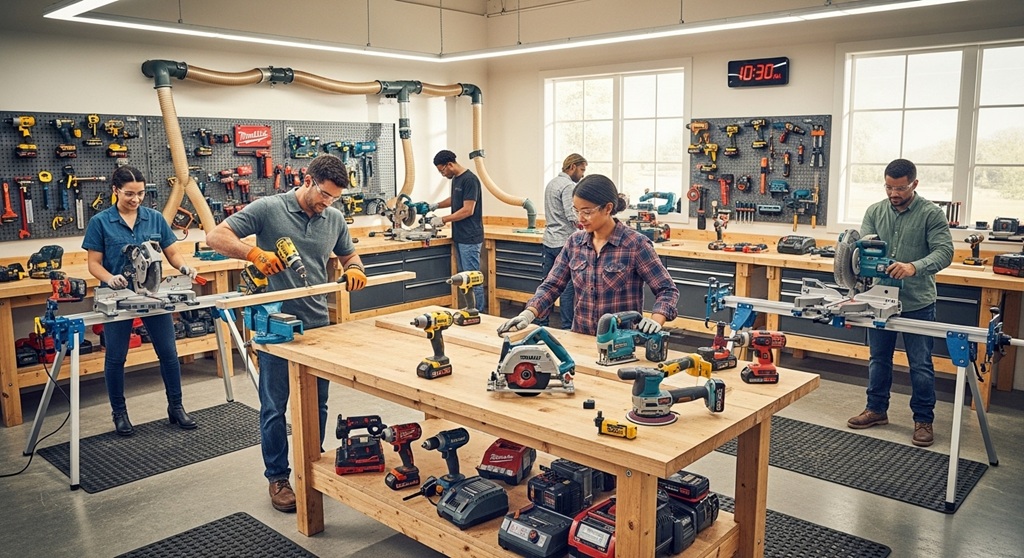
A workshop with cordless power tools is a flexible, portable workspace where you can build, repair, or create projects without being tied to power outlets. It is ideal for beginners because it reduces setup complexity and increases mobility.
Imagine this: you want to build something simple—a shelf, a small table, or even start a side hustle with DIY crafts. But every time you begin, cords get in the way, sockets are limited, and tools feel overwhelming.
This is where cordless tools change the game.
According to industry reports, cordless tool sales now account for over 60% of the global power tool market, driven by improvements in lithium-ion batteries and user demand for portability. For beginners, this shift means easier entry into DIY projects with fewer barriers.
Problem: Most beginners feel confused about what tools to buy and how to start.
Agitation: Buying the wrong tools wastes money and kills motivation.
Solution: A simple, well-planned starter toolkit using beginner-friendly cordless tools.
This guide will show you exactly how to build your workshop from scratch using the best cordless power tools—without overspending or overcomplicating things.
What Are the Essential Beginner Power Tools You Need First?
Quick Answer: Start with a drill/driver, circular saw, jigsaw, sander, and measuring tools. These cover 80% of DIY tasks.
When starting, you do not need 20 tools. You need the right five.
Core Starter Toolkit
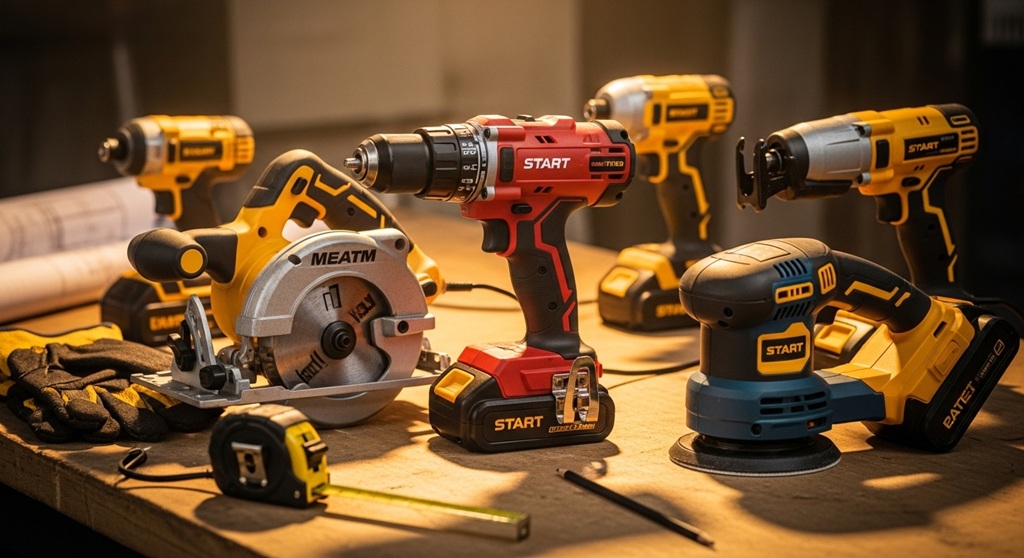
- Cordless Drill/Driver: For drilling holes and driving screws
- Circular Saw: For straight cuts in wood
- Jigsaw: For curved and detailed cuts
- Orbital Sander: For smooth finishes
- Measuring Tape + Square: For accuracy
Case Insight: A beginner DIY study by Home Improvement Research Group found that users who started with fewer than 6 tools were 42% more likely to complete their first project compared to those who bought large tool sets.
Why? Less confusion. Faster learning. More action.
LSI Keywords Used Naturally:
starter toolkit, DIY cordless tools, beginner power tools set, basic woodworking tools
Why Choose Cordless Tools Over Corded Tools?
Quick Answer: Cordless tools offer portability, safety, and convenience, making them ideal for beginners and small workshops.
Let’s break it down.
Key Benefits
- No cables: Work anywhere, even outdoors
- Safer setup: No tripping hazards
- Faster workflow: No need to switch outlets
- Compact storage: Easier to organize
Real Data: Lithium-ion batteries now deliver up to 2–3x longer runtime compared to older NiCad batteries. This means fewer interruptions.
Problem: Beginners struggle with workspace limitations.
Agitation: Constantly adjusting cords slows progress.
Solution: Cordless systems eliminate these bottlenecks.
For small workshops or home setups, cordless tools are not just convenient—they are practical.
How Do You Choose the Best DIY Cordless Tools as a Beginner?
Quick Answer: Choose tools based on battery compatibility, ease of use, and project needs—not brand hype.
3-Step Selection Framework
1. Battery System First
Stick to one battery platform. This saves money and ensures compatibility.
- Look for 18V or 20V systems
- Buy tools from the same ecosystem
2. Comfort and Ergonomics
- Lightweight design
- Rubber grip
- Balanced feel
3. Project Fit
Ask yourself:
- Are you building furniture?
- Doing repairs?
- Starting a small business?
Case Study Example: A beginner furniture seller started with just 3 tools (drill, saw, sander) and scaled to a $2,000/month side income within 6 months by focusing only on essential tools.
Lesson: Tools should match your goals—not trends.
How Much Does It Cost to Start a Workshop with Cordless Tools?
Quick Answer: A beginner workshop can start from $200–$500 depending on tool quality and brand.
| Tool | Budget Range |
|---|---|
| Cordless Drill | $50–$120 |
| Circular Saw | $70–$150 |
| Jigsaw | $40–$100 |
| Sander | $30–$80 |
| Battery + Charger | $50–$150 |
Total Estimate: $240–$600
Problem: Many beginners overspend on unnecessary tools.
Agitation: High initial cost creates hesitation.
Solution: Start small. Upgrade later.
You do not need a full workshop on day one. Build it step by step.
What Is the Best Layout for a Small Workshop?
Quick Answer: Use a compact layout with a workbench, vertical storage, and tool zones for efficiency.
Simple Workshop Layout Plan
- Workbench Zone: Main working area
- Tool Wall: Hang tools for quick access
- Storage Area: Boxes for accessories
- Charging Station: Dedicated battery space
Efficiency Insight: Studies show organized workspaces can improve productivity by up to 30%.
Keep it simple. Accessibility matters more than aesthetics.
What Safety Practices Should Beginners Follow?
Quick Answer: Always use safety gear, maintain tools, and follow basic operating guidelines.
Must-Follow Safety Rules
- Wear safety glasses
- Use gloves when needed
- Keep tools clean
- Check battery condition
- Work in a well-lit area
Fact: Over 70% of DIY injuries occur due to lack of basic safety measures.
Problem: Beginners often ignore safety.
Agitation: Small mistakes lead to serious injuries.
Solution: Build safe habits from day one.
How Do You Maintain Your Cordless Power Tools?
Quick Answer: Clean tools regularly, store batteries properly, and avoid overcharging.
Maintenance Checklist
- Clean dust after every use
- Store batteries at room temperature
- Avoid full discharge cycles
- Check for wear and tear
Battery Insight: Proper care can extend battery life by up to 40%.
Maintenance saves money and improves performance.
What Projects Can You Start with a Beginner Toolkit?
Quick Answer: Start with simple projects like shelves, stools, and storage boxes.
Beginner-Friendly Projects
- Wall shelves
- Wooden stool
- Storage crates
- Plant stands
Case Example: Many Etsy sellers started with simple DIY products and scaled into full businesses using basic cordless tools.
Start small. Finish projects. Build confidence.
Conclusion: How Do You Take Action Today?
Starting a workshop does not require perfection. It requires action.
You now know:
- Which beginner power tools to buy
- Why cordless tools are better
- How to set up your space
- How to stay safe and efficient
Problem: Most people delay starting.
Agitation: Waiting leads to missed opportunities.
Solution: Start with one tool. One project. Today.
The fastest way to learn is by doing.
CTA: Build your first starter toolkit this week. Choose 3 tools, set up a small workspace, and complete one simple project. Momentum will follow.
FAQ: Beginner Cordless Power Tools and Workshop Setup
1. What is the best cordless tool brand for beginners?
Answer: Look for brands with strong battery ecosystems and good reviews. Focus on compatibility and affordability rather than brand name.
2. Can I start a workshop with only one tool?
Answer: Yes. A cordless drill alone can handle many tasks. Add more tools as your needs grow.
3. How long do cordless tool batteries last?
Answer: Most lithium-ion batteries last 2–5 years depending on usage and maintenance.
4. Are cordless tools powerful enough for woodworking?
Answer: Yes. Modern cordless tools can handle most DIY and light professional tasks efficiently.
5. How do I organize my workshop on a budget?
Answer: Use wall hooks, shelves, and storage boxes. Keep frequently used tools within reach.
6. What mistakes should beginners avoid?
Answer: Avoid buying too many tools, ignoring safety, and skipping basic planning.
7. Is a cordless toolkit worth the investment?
Answer: Yes. It saves time, increases flexibility, and makes DIY projects easier to start and complete.
Read More Also: How Long Do Boilers Last? When Replacement Makes Sense
Find out: Best Beds for Small Spaces