
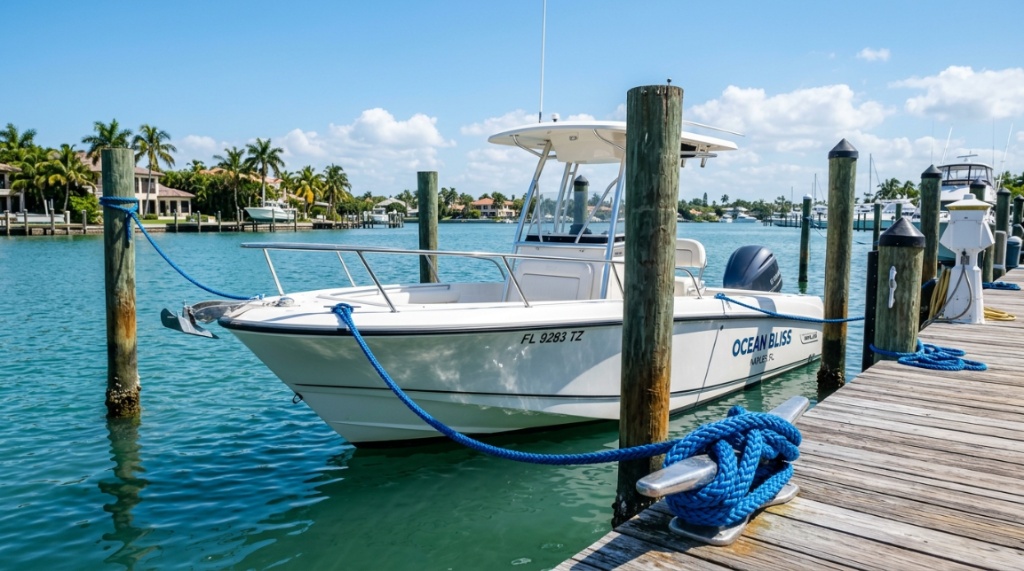
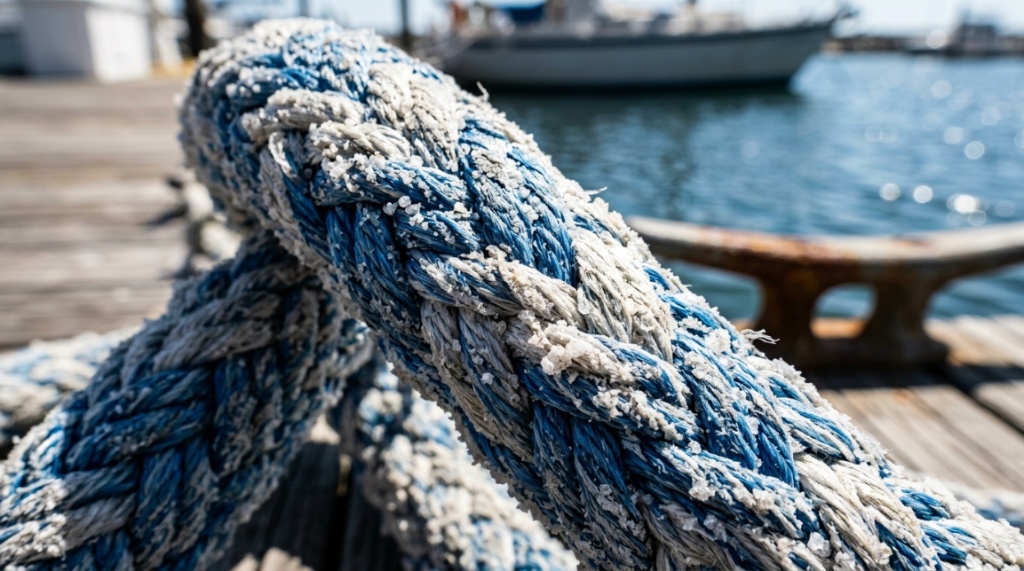
Imagine this: It’s a scorching July afternoon in the Florida Keys. You’ve just spent the perfect day on the water, and you’re docking your boat at your favorite marina. But as you reach for your dock line, you notice it feels stiff and rough. Upon closer inspection, you see tiny white crystals forming on the fibers—salt is literally eating away at your rope. This isn’t just an aesthetics problem; it’s a safety hazard. The sun, heat, and relentless saltwater environment of Florida demand a specific type of dock line. You don’t just need any rope; you need saltwater-proof dock lines designed to withstand the harshest marine conditions.
Choosing the wrong dock line in Florida isn’t just a minor inconvenience; it can lead to snapped lines, damaged gel coat, or even a lost boat. In this guide, I’ll walk you through exactly what makes a dock line “Florida-ready,” how to decipher the technical jargon, and how to select the perfect ropes that will last for years, not just one season. By the end, you’ll have the confidence to make a purchase that protects your vessel and your peace of mind.
What Exactly Makes a Dock Line “Saltwater-Proof”?
When we talk about “saltwater-proof” dock lines, we are not talking about a magical rope that repels water. Instead, we are referring to materials and constructions that are inherently resistant to the degrading effects of salt, UV rays, and abrasion. The key is in the polymer chemistry of the fibers.
Standard nylon absorbs water and loses up to 10-15% of its strength when wet, but it is still the gold standard for dock lines due to its elasticity. However, “saltwater-proof” goes a step further. It means the fibers are treated or manufactured to resist hydrolysis (chemical breakdown from water) and UV degradation, ensuring the rope retains its breaking strength and flexibility over a prolonged period.
Key Fiber Properties for Salt Resistance
Not all fibers are created equal. Polyester is naturally more resistant to UV and abrasion than nylon, but it has less stretch. For dock lines, you need a balance. Look for virgin fibers that haven’t been recycled, as recycled materials often have compromised structural integrity. The best “saltwater-proof” lines often use a blend or a specific coating that prevents salt crystals from cutting the fibers internally.
The Role of a “Kevlar” or “Vectran” Core
Some premium dock lines feature a core of high-strength fibers like Kevlar or Vectran, which are completely unaffected by saltwater. This core provides the strength, while the outer cover (usually nylon or polyester) provides UV protection and abrasion resistance. This dual-layer construction is the ultimate defense against the Florida marine environment.
Why “Water-Resistant” is a Misleading Term
Many novice boaters confuse water-resistant with saltwater-proof. A water-resistant line might have a coating that helps it shed water, but once that coating wears off—which happens quickly in harsh conditions—the underlying fiber is exposed to salt degradation. True saltwater-proof lines are engineered from the inside out, not just coated on the surface.
Why Standard Dock Lines Fail Quickly in Florida
The Florida marine environment is uniquely brutal. It’s a combination of intense UV radiation, high humidity, and corrosive salt air that creates a “perfect storm” for dock line degradation. If you’re using a standard polypropylene rope from a hardware store, you are fighting a losing battle.
Standard lines fail for three primary reasons: UV breakdown, chafe from constant movement, and loss of elasticity. In Florida, the sun’s UV rays oxidize the polymer chains in the rope, making them brittle. The constant tide and wind movement cause chafing against the cleats and dock edges, which severs the outer strands. Once the outer layer fails, the inner core degrades quickly.
The Impact of Intense UV Radiation
Florida averages over 230 days of sunshine per year. This isn’t just warm; it’s a constant assault of ultraviolet radiation. UV rays break down the molecular structure of the rope, turning it stiff and weak. A line left in the Florida sun for 6 months can lose up to 50% of its original breaking strength, even if it looks fine on the outside.
Abrasion from Sand and Concrete
The sandy, gritty environment acts like sandpaper on your lines. When your boat rocks, the line rubs against the dock edge, which is often covered in dried salt and sand. This creates a sawing action that cuts deep into the rope. A “saltwater-proof” line must have a tightly braided cover to withstand this constant friction.
Biological Growth and Mildew
Warm, salty, and wet—this is the perfect breeding ground for mold, mildew, and algae. These organisms can grow inside the strands of the rope, causing it to stiffen and rot. Saltwater-proof lines often use synthetic fibers that do not provide a food source for these organisms, preventing this internal decay.
How to Choose the Right Diameter and Length
Selecting the correct diameter is about matching the rope’s breaking strength to your boat’s size and the expected loads. There is no “one size fits all” rule; it’s about physics. The general guideline is 1/8 inch of line diameter for every 9 feet of boat length. However, this is a minimum, and going larger is always safer for the Florida storm season.
The length of your lines is equally critical. You need lines long enough to accommodate the tide changes. In Florida, the tide can fluctuate 3 to 5 feet in some areas. If your line is too short, your boat will hang on the cleat, causing stress on the vessel. If too long, the boat will drift too far from the dock, Heading out to the coast for a day of fishing or relaxing by the water? Make transporting your gear effortless once you dock by checking out our guide to help you Find a Foldable Beach Wagon with Ample Storage.
A Simple Formula for Diameter Sizing
For a standard single-engine powerboat up to 30 feet, a 3/8-inch line is usually sufficient for docking. For boats 30 to 45 feet, step up to 1/2-inch. For larger vessels over 50ft, 5/8-inch or 3/4-inch is recommended. Always check the rope manufacturer’s breaking strength chart—you want a minimum breaking strength of at least 10,000 lbs for a 30-foot boat.
Calculating Correct Length for Tides and Storm Surges
Here is a practical tip: The length of your bow and stern lines (the ones holding the boat to the dock) should be roughly 1.5 times the length of your boat. Spring lines (preventing forward/backward movement) should be about the length of your boat. If you are docking in an area with extreme tide ranges (like the Gulf Coast), add 10% more length to the overall calculation.
Breaking Strength vs. Working Load: What’s the Difference?
Breaking strength is the point at which the rope fails. Working load is the safe limit you should use, which is usually 10-15% of the breaking strength. Never stress a line to its breaking point. Choosing a thicker line gives you a higher working load, meaning you have more safety margin during sudden wakes or storms.
Which Material Reigns Supreme: Nylon vs. Polyester?
In the saltwater dock line world, the battle is between Nylon and Polyester. Each has its benefits, and the “best” choice depends on what you value more: elasticity or UV resistance. If you want maximum shock absorption, Nylon is your pick. If you want longevity against the sun, Polyester wins.
Nylon is the traditional choice because of its superior elasticity—it can stretch up to 30% under load, which helps absorb the jerk of waves and wakes. However, Nylon loses strength when wet (about 10%) and is more susceptible to UV damage. Polyester, on the other hand, has little stretch (only about 3-5%) but is incredibly stable and UV resistant.
When to Choose Nylon
If your boat stays in the water year-round in a berth that faces frequent boat wakes, you need Nylon’s shock-absorbing properties. The stretch prevents sudden jerks from ripping your cleats out of the deck. Look for Nylon that has been treated with a UV inhibitor to combat the Florida sun.
When to Choose Polyester
If you are a frequent boater who deploys lines daily and leaves them exposed to the sun, Polyester will outlast Nylon by several years. It is also much more abrasion-resistant. Many high-end “saltwater-proof” lines are actually a polyester cover over a nylon or Vectran core, giving you the best of both worlds.
Top Construction Types: Three-Strand vs. Double Braid
Three-strand lines are cheaper and easier to splice, but they are more prone to abrasion because the strands are exposed. Double braid (a braided core inside a braided cover) is superior. The cover protects the core, and the core bears the load. For Florida, always choose a double-braid construction if your budget allows, as it handles abrasion significantly better.
How to Properly Inspect and Maintain Your Lines
Even the best saltwater-proof lines require regular inspection. The harsh environment can hide internal damage. You should inspect your lines at the beginning of the season, mid-season, and after any severe storm. A 30-second visual check can prevent a catastrophic failure.
Maintenance is about washing and storage. Even though the lines are “saltwater-proof,” you should rinse them with fresh water periodically to remove salt crystals and grit that embed in the fibers. This grit acts like a file, cutting the rope from the inside out as it flexes.
Step-by-Step Inspection Routine
- Feel the line: Run the line through your hands. Look for soft spots, flat spots, or areas that feel “mushy.” This indicates internal core damage.
- Visually check for cuts: Examine the outer cover for broken strands, fuzziness, or deep cuts. A cut that goes through 20% of the diameter requires immediate replacement.
- Check the ends: Inspect the splices and eyes. If the stitching is loose or the splice is pulling, do not use the line.
- Test the flexibility: Bend the line tightly. If you see small cracks in the fibers or hear a crunching sound, the line is UV-damaged and brittle.
Washing and Storage Best Practices
To wash, coil the line loosely in a bucket of fresh water with a mild soap (like Dawn). Let it soak for 15 minutes to dissolve salt crystals. Agitate gently—do not scrub aggressively. Rinse thoroughly and hang to dry in the shade. Do not machine wash or machine dry, as the agitation can break the fibers.
When to Retire Your Dock Lines
Most manufacturers recommend replacing dock lines every 2 to 3 years, even with light use. If you notice that the line feels hard and stiff after it dries, or if the color has faded significantly, it is time to replace. Do not wait for a line to snap to replace it.
Can You Use Dock Lines for Mooring and Anchoring?
This is a common confusion: using your dock lines as a temporary anchor line. The short answer is yes, in a pinch, but it is not ideal. Dock lines are sized for horizontal loads (pulling against a cleat) while anchor lines are sized for vertical shock loads (jerking against a snubber).
Using a dock line for anchoring can work in calm conditions, but because dock lines lack the elasticity of an anchor rode (which is usually three-strand nylon), they are more prone to chafing on the seabed. If you find yourself needing to anchor, you should reduce your speed and use a “snubber” to add elasticity.
The Difference in Load Dynamics
Dock lines are designed to hold a boat tight against a dock, which is a static load. Anchor lines are designed to hold a boat off the bottom in a dynamic environment with waves pulling and releasing. The repeated stretching of a dock line in an anchoring scenario can cause it to heat up and weaken the fibers quickly.
Safety Risks of Using the Wrong Line
If a dock line snaps while anchoring, it whips back with tremendous force. This is a serious safety hazard. Always carry a dedicated anchor line on board. For short stops in no current conditions, a dock line can be used as a backup, but never as a primary anchor in windy conditions.
What is the Ideal Number of Dock Lines You Need?
You never want to rely on just two lines. The bare minimum for an overnight stay is four lines: two bow lines and two stern lines. However, for a secure setup in Florida, you should have a minimum of six lines on board. This provides redundancy and allows you to control the boat in different wind directions.
The extra lines are for spring lines, which are essential for preventing the boat from moving forward and backward along the dock. A well-docked boat uses at least two spring lines (one forward, one aft) to distribute the load and reduce surging.
Essential Line Configuration for a Standard Slip
- Bow Lines (2): These run from the bow cleat forward to the dock cleat.
- Stern Lines (2): These run from the stern cleat aft to the dock cleat.
- Forward Spring Line (1): Runs from the bow cleat backward to the dock cleat.
- Aft Spring Line (1): Runs from the stern cleat forward to the dock cleat.
How to Set Up a “Hurricane” Docking Pattern
During hurricane season, you should double up your lines. This means doubling the number of lines and crossing them to create an “X” pattern. This pattern provides maximum resistance to sideways movement and allows for some give during storm surge. Never tie your boat with taut lines during a storm—leave enough slack to accommodate water level rise.
Using Line Chafe Guards
Even with the best lines, chafe is your enemy. Invest in leather or rubber chafe guards. These wrap around the line at the point where it passes through the chock or over the dock edge. They are cheap insurance and will extend the life of your lines by 50% or more.
How to Tie the Most Secure Knots for Florida Docks
Tying a proper knot is just as important as the line itself. The two knots you need to master are the Cleat Hitch and the Clove Hitch. However, there is a specific way to tie a cleat hitch for marine use that prevents slipping and allows for quick release.
Most novices wrap the line around one horn of the cleat. The correct method is to make a full loop around the base of the cleat first, then cross over the top of the cleat, then wrap under the opposite horn, and finish with a half hitch. This is called the “Hitch” and it is secure.
Step-by-Step Guide to the Marine Cleat Hitch
- Pass the line around the base of the cleat (the horn closest to the boat) once.
- Bring the line across the top of the cleat and loop it around the opposite horn.
- Bring the line back across the top of the cleat and make a second loop around the first horn.
- Finish by creating a small loop in the line and tucking it under the final turn on top of the cleat. Pull tight.
The Best Quick-Release Knot
For dock lines, a simple “Slipped Cleat Hitch” is ideal. When you finish the final loop, you pull the line through to create a removable loop instead of tucking it under. This allows you to release the line instantly by pulling the loose end, even under heavy load. This is crucial during unexpected storms.
Knots to Avoid
Avoid using a Bowline knot for dock lines. While it is a strong knot, it is difficult to untie after being under load with wet, salty rope. Avoid half hitches on the cleat—they jam and are nearly impossible to untie when saturated.
How to Protect Your Gel Coat from Dock Line Marks
Beyond the rope itself, you need to protect your boat. Black rubber dock lines leave unsightly scuff marks on your white gel coat. These marks are difficult to remove and can become permanent if baked in by the sun. However, the right choice of line can minimize this.
Look for dock lines with a white or light-colored cover. Lighter colors do not transfer dye to your hull as easily as dark ones. Alternatively, ensure your lines have vinyl sleeves or you place a floating fender between the line and the hull.
Cleaning Off Existing Dock Line Marks
If you already have scuff marks, a simple homemade solution works wonders. Mix baking soda with a little water to form a paste. Apply it to the mark, rub gently in a circular motion with a soft cloth, and rinse. For stubborn marks, use a specialized hull cleaner like MaryKate or Star brite with a magic eraser—but test on a small area first.
Best Practices for Cleat Placement
How you route the line off the boat matters. Ensure the line goes through a chock that is aligned with the cleat to avoid rubbing against the gunwale. If you don’t have chocks, use a line guard. Rubbing against the sharp edge of the gunwale is the #1 cause of line failure and gel coat damage.
Using Fenders Correctly
Place fenders vertically between the hull and the dock. Inflate them to about 80% capacity, leaving them slightly soft to absorb impact. Do not tie the fender line to the same cleat as the dock line—this is a safety hazard. The fender line should be tied to a rail or a separate cleat.
What Are the Top Features to Look for in 2026 Lines?
As we move into 2026, rope technology has advanced. The newest “saltwater-proof” lines are no longer just single-material ropes. They are high-tech composites designed with specific properties in mind: low stretch, high strength, and zero water absorption. Look for lines featuring “Dyneema” or “UHMWPE” cores, which are 15 times stronger than steel on a weight basis.
These modern lines are also more flexible, making them easier to handle and coil, even when wet or cold. They also tend to float, which is a safety feature if you drop one overboard. However, they are significantly more expensive. For the average boater, a premium polyester double-braid is still the best “value” choice.
The Rise of “Hybrid” Cores
The new trend is a polyester cover over a nylon core, or a Dyneema core. This gives you the elasticity to absorb shock (from the nylon) and the abrasion resistance and UV protection (from the polyester cover). This is my personal recommendation for Florida boaters who want the best of both worlds.
Integrated ‘Smart’ Lines
In 2026, some high-end manufacturers are offering lines with integrated sensors that can measure tension and alert you via a mobile app if a line is over-stressed. While this is futuristic, it is excellent for boats left unmonitored in remote marinas. However, these are still niche products.
Color Coding and Visibility
Brightly colored lines are not just for looks. They are safer because they are easier to see, preventing tripping hazards on the dock. In 2026, look for lines with reflective tracers woven into them, making them visible if you dock at night.
Frequently Asked Questions
How often should I replace my dock lines in Florida?
You should inspect your lines every month and replace them every 2 to 3 years, regardless of visual condition. The harsh UV and salt environment compromises the fibers even if they look intact. If you notice stiffness, fraying, or discoloration, replace them immediately.
Is polypropylene good for saltwater dock lines?
No. Polypropylene is lightweight and floats, but it degrades rapidly in sunlight and has very low abrasion resistance. It is only suitable for temporary use or as a tow rope, not for permanent dock lines in Florida. It is not considered a saltwater-proof material.
Can I leave my dock lines on the boat in the water?
Yes, you can, but you must choose a line specifically rated for continuous submersion and UV exposure. Even then, you should rinse them with fresh water and inspect them regularly. Sunlight is the main culprit, so consider using line sleeves or removing the top line when the boat is docked for extended periods.
What is the best knot for a dock cleat?
The best knot is the Cleat Hitch. It is strong, secure, and easy to untie, even under load. Make sure you finish it with a half hitch to prevent slipping. Avoid jamming the line by crossing over the top of the cleat incorrectly.
Do dock lines stretch?
Nylon stretches significantly (up to 30%), which is great for absorbing shock, while polyester stretches minimally (up to 5%). Most “saltwater-proof” dock lines use nylon for this stretch. However, too much stretch can cause the boat to hit the dock, so a blend is often ideal.
Are colored dock lines as strong as white ones?
Yes, as long as the dye is applied correctly. Cheap dyes can weaken the fiber, but premium manufacturers use specialized dyeing processes that do not affect tensile strength. It is always safer to choose lines from a reputable brand that tests their fiber strength.