
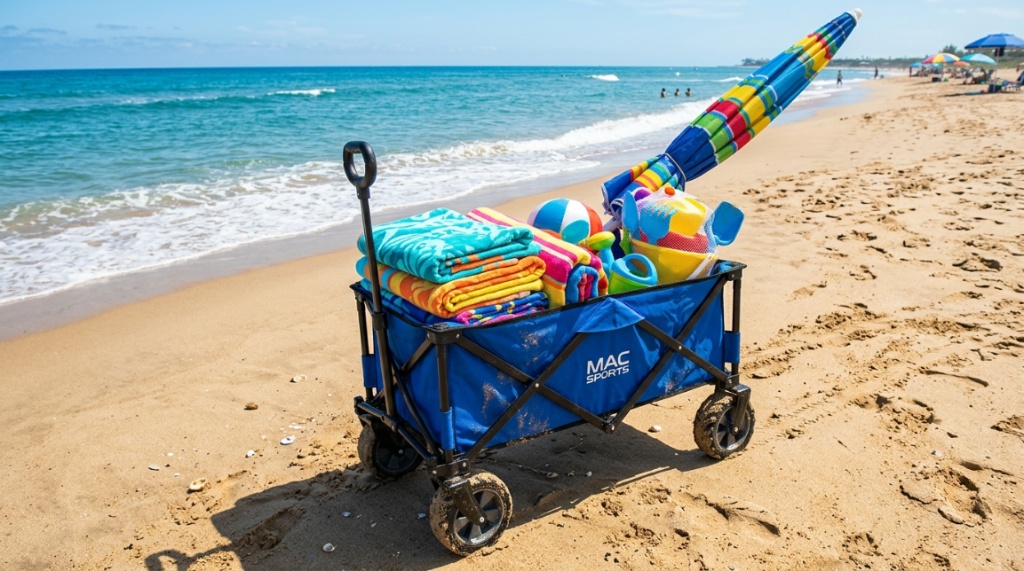
There’s a specific kind of frustration that comes from hauling coolers, chairs, umbrellas, and beach bags across soft sand while your arms feel like they’re about to detach. You’ve probably considered a cart before, but the real challenge isn’t just finding any wagon—it’s finding a foldable beach wagon with ample storage that actually survives the sand, fits in your trunk, and holds everything without collapsing under the weight. The market is flooded with options that look great in photos but fail in real-world conditions. This guide cuts through the noise, explaining exactly what to look for, what to avoid, and how to match a wagon to your specific beach habits.
Why Standard Wagons Fail at the Beach
Before you start shopping, it helps to understand why a regular utility wagon or a cheap folding cart often disappoints. The beach presents a unique set of challenges that a driveway or a park path simply doesn’t.
The Sand Factor
Standard plastic wheels sink immediately into dry, loose sand. You end up dragging a heavy plow instead of rolling a cart. Wide, inflated tires are the single most important feature for beach use because they float over the surface rather than cutting into it. If a wagon doesn’t have balloon-style tires, it’s not a serious beach contender.
Weight Distribution and Stability
A wagon with a huge storage capacity is useless if it tips over the moment you place a cooler on one side. The base width, wheel placement, and the height of the center of gravity all determine stability. Look for a wagon with a low deck and a wide wheelbase. This is especially critical when you’re loading heavy items like drinks or a tent.
Key Features to Prioritize for Ample Storage
When we talk about “ample storage,” we’re not just looking at the cubic feet of the main compartment. It’s about how smartly that space is organized and how accessible it is.
Look Beyond the Cubic Foot Rating
Manufacturers often list a volume number, but that doesn’t tell you if a large cooler will fit flat on the bottom. Check the actual interior dimensions, especially the length and width of the floor. A wagon that is 35 inches long but only 18 inches wide might not fit a standard 48-quart cooler. Measure your largest item (usually the cooler or the beach tent) and compare it to the wagon’s interior floor space.
Pockets, Pouches, and Dividers
Ample storage isn’t just about the main tub. External mesh pockets are perfect for sunscreen, phones, and keys—items you need quickly without digging through the main compartment. Some premium wagons include insulated cooler compartments or removable liners, which add organizational value without taking up main-floor space.
Weight Capacity vs. Real-World Load
Pay close attention to the weight limit. A wagon rated for 150 pounds might technically hold that much, but it will be nearly impossible to pull through sand at that weight. Aim for a wagon with a weight capacity that is at least double your expected load. If you typically carry 50 pounds of gear, look for a wagon rated for at least 100 pounds. This ensures the frame, wheels, and handle can handle the strain without bending or breaking.
How to Evaluate the Folding Mechanism
The “foldable” part of the equation is just as important as the storage. A complicated folding system will make you dread using the wagon, and a flimsy locking mechanism can cause the wagon to collapse mid-trip.
One-Hand Fold vs. Two-Hand Fold
Some wagons feature a one-hand, one-pull folding system that collapses the frame into a flat square. This is convenient, but it often comes with a trade-off: these wagons sometimes have less rigid frames. A two-hand fold (where you pull up on two separate handles or triggers) usually indicates a more robust, X-frame design that offers better structural support when fully open.
Check the Locking Joints
When you open the wagon, listen for a distinct “click” from the locking joints. This click indicates the frame is securely locked into place. If the joints feel loose or require excessive force to engage, the wagon will likely wobble or fold up unexpectedly when you hit a bump. Always test the locking mechanism multiple times before purchasing, especially if you’re buying online and plan to assemble it yourself.
Storage Size When Collapsed
Measure your trunk space before you buy. A wagon that folds to a 30-inch square might not fit in a compact car’s trunk. Look for the “folded dimensions” in the product specifications. Some wagons fold flat enough to slide under a bed or stand upright in a closet, which is a huge bonus for apartment dwellers.
Wheel Types: The Most Critical Decision
You can compromise on fabric quality or handle comfort, but you cannot compromise on wheels. This is the defining feature that separates a beach-worthy wagon from a driveway cart.
| Wheel Type | Best For | Key Limitation |
|---|---|---|
| Plastic (Hard) | Pavement, sidewalks, hard-packed trails | Sinks in sand; poor shock absorption |
| Foam (EVA) | Light sand, grass, mixed terrain | Can wear down over time; not ideal for deep, dry sand |
| Inflatable Rubber (Balloon) | Deep sand, rocky terrain, heavy loads | Requires occasional inflation; heavier overall wagon weight |
Why Inflatable Tires Win for Deep Sand
Inflatable tires offer the largest contact patch with the ground, which distributes the wagon’s weight over a wider area. This flotation effect is what allows you to pull a heavy load through soft sand without excessive effort. The downside is maintenance—you need to check air pressure before each trip. However, the reduction in pulling effort is dramatic enough that most frequent beachgoers consider it a non-negotiable feature.
Practical Considerations for Real Beach Trips
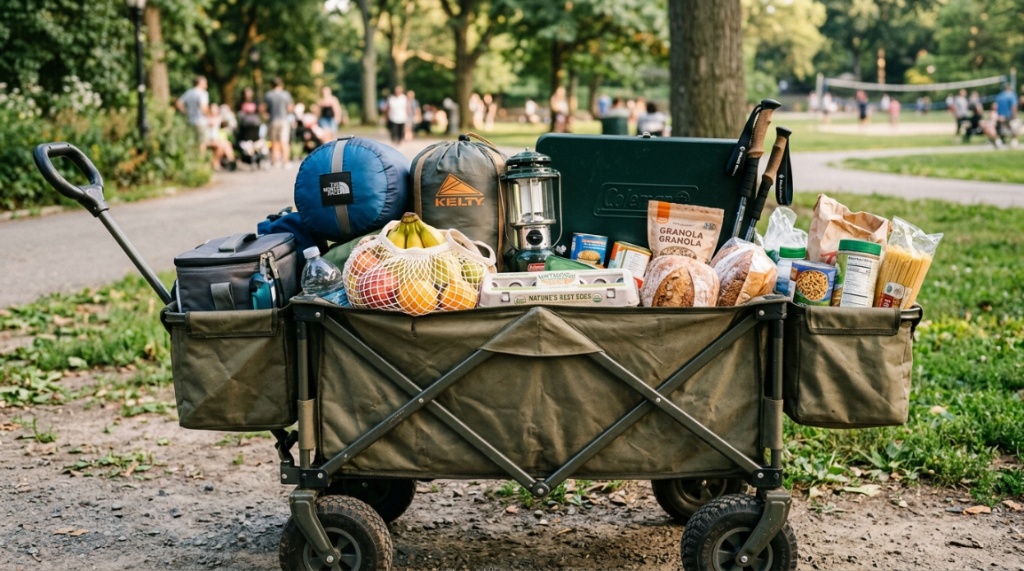
Beyond the specs, there are practical details that make a huge difference in daily use. These are the things you only realize after you’ve wrestled with a poorly designed wagon on a hot day.
Handle Design and Ergonomics
A fixed handle is a dealbreaker. You need an adjustable handle that extends and pivots. When you pull a wagon through sand, the angle of the pull changes constantly. A pivoting handle allows you to walk naturally without bending your wrist at an awkward angle. Look for a handle with a comfortable foam grip that won’t dig into your palms when the wagon is fully loaded.
Parking Brake
This is an overlooked feature that is incredibly useful on a sloped beach. A parking brake keeps the wagon stationary while you unload chairs or set up your umbrella. Without it, you’ll be chasing your wagon down the beach every time you let go of the handle.
Fabric Quality and Cleaning
The fabric of the wagon bed needs to be durable, UV-resistant, and easy to clean. Sand, saltwater, and sunscreen will degrade cheap polyester quickly. Look for a wagon with a ripstop fabric or a thick Oxford cloth. A drain hole in the bottom is also a smart feature—it allows sand and water to escape instead of pooling in the bottom of the wagon.
Common Mistakes to Avoid When Buying
Many people end up buying a second wagon because they made one of these avoidable errors the first time. Here’s what to watch out for.
Ignoring the Pulling Effort
Just because a wagon has a high weight capacity doesn’t mean it’s easy to pull. The gear ratio of the wheels and the overall rolling resistance matter. A wagon with small wheels (under 10 inches) will require significantly more effort to pull through sand than one with 12-inch or larger wheels. Test the wagon with weight in it, not empty.
Choosing Style Over Substance
Some wagons look rugged with all-terrain tires and a sleek frame, but the actual frame is made of thin-gauge steel that bends under load. Check the frame material. Aluminum is lightweight but can dent; steel is heavier but more durable. Look for a wagon with a reinforced frame at the corners and where the handle attaches.
Forgetting About the Return Trip
You might load the wagon once at the car, but you’ll also need to load it at the end of the day—with wet towels, sandy kids, and possibly a half-empty cooler. Ensure the wagon is easy to open and close quickly, and that the storage compartment is accessible from multiple sides. A wagon that requires you to unload everything to fold it up is a nuisance.
How to Match a Wagon to Your Beach Lifestyle
Not everyone needs the same wagon. Your choice should be based on how you actually use the beach,Before heading out to the shoreline, make sure you pack the right footwear for coastal adventures by exploring our guide on Lightweight Water Socks Without Losing Protection.
For the Family with Young Kids
You need maximum storage for diapers, snacks, toys, and a pop-up tent. You also need a wagon that can double as a makeshift changing station or a place for a tired toddler to sit. Look for a wagon with a high weight capacity (200+ pounds) and a sturdy, flat bottom. The ability to add an accessory like a canopy or a bench seat is a plus.
For the Minimalist Couple
If you just need two chairs, a small cooler, and a backpack, you don’t need a massive wagon. A medium-sized wagon with a 100-150 pound capacity will be lighter, easier to fold, and easier to maneuver. Prioritize a compact fold and a lightweight frame (under 25 pounds) so it’s easy to lift into the trunk.
For the Fishing or Surfing Enthusiast
You need a wagon that can handle wet gear, sand, and potentially heavy tackle boxes. Look for a wagon with a drain hole, rust-resistant hardware, and a fabric that dries quickly. Inflatable tires are essential for crossing soft sand dunes to reach the water’s edge.
Frequently Asked Questions
Can I use a foldable beach wagon on grass or pavement?
Yes, most foldable beach wagons with inflatable tires work well on grass, pavement, and gravel. The large tires provide a smooth ride on hard surfaces and adequate flotation on softer ground. However, they are heavier than standard utility wagons, so they may feel cumbersome for simple trips to the grocery store.
How much weight can a typical foldable beach wagon hold?
Most models range from 100 to 300 pounds. For beach use, it’s wise to choose a wagon with a capacity of at least 150 pounds to account for the weight of the wagon itself, the gear, and the added resistance of pulling through sand. Always check the manufacturer’s specific rating.
Are inflatable tires worth the maintenance hassle?
For frequent beachgoers, yes. Inflatable tires dramatically reduce the effort required to pull a wagon through soft sand. The maintenance is minimal—just a quick air check before each trip. If you only go to the beach once or twice a year, a high-quality foam tire might be sufficient.
How do I clean sand out of a foldable beach wagon?
Most wagons have a removable fabric liner that you can shake out or hose down. For the frame, use a damp cloth to wipe off sand and salt. Ensure the wagon is completely dry before folding and storing to prevent mold and rust. A drain hole in the fabric bottom helps flush out sand and water.
What is the best way to fold and store a beach wagon?
Always consult the manufacturer’s instructions, but most wagons fold by pulling up on the handle or pressing a release button on the frame. Once collapsed, store it in a dry place. If space is tight, look for a wagon that folds flat enough to slide under a bed or stand upright in a closet.
Conclusion
Finding the right foldable beach wagon with ample storage comes down to understanding your specific needs and not compromising on the critical components: wheels, frame strength, and folding mechanics. Prioritize inflatable tires for sand, a robust locking frame for stability, and a storage layout that fits your actual gear. Avoid the temptation to buy the cheapest option, as it will likely fail within a season. Instead, invest in a wagon that matches your beach frequency and load size. With the right wagon, you can turn a stressful, exhausting trek across the sand into a simple, enjoyable walk. Take your time, measure your gear, and choose a wagon that will serve you well for many seasons to come.

