
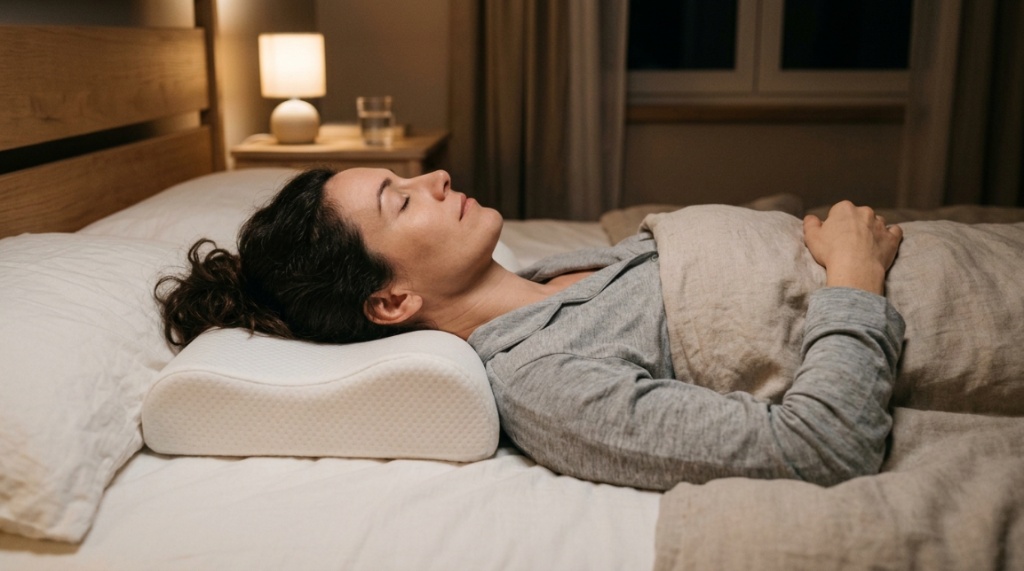
Waking up gasping for air, with a dry mouth and a pounding headache, is terrifying. If you live in California—whether you’re navigating the dry heat of the Valley or the coastal humidity of San Diego—you know that allergies and air quality can make sleep apnea symptoms even worse. You are not just looking for a softer place to rest your head; you are looking for a medical aid that can help you breathe. The right sleep apnea pillow California residents rely on isn’t a luxury; it’s a critical component of your therapy toolkit. Let’s cut through the marketing noise and figure out exactly which shape, material, and height will finally give you a full night of restorative sleep.
What Makes a Pillow Specifically Designed for Sleep Apnea?
A standard pillow pushes your neck forward, kinking your airway like a bent garden hose. Sleep apnea pillows are engineered with cutouts, elevated contours, and specialized foam to keep your cervical spine aligned and your airway open. Unlike regular pillows, they accommodate CPAP masks and hoses without leaking air.
The Anatomy of an Anti-Snoring Pillow
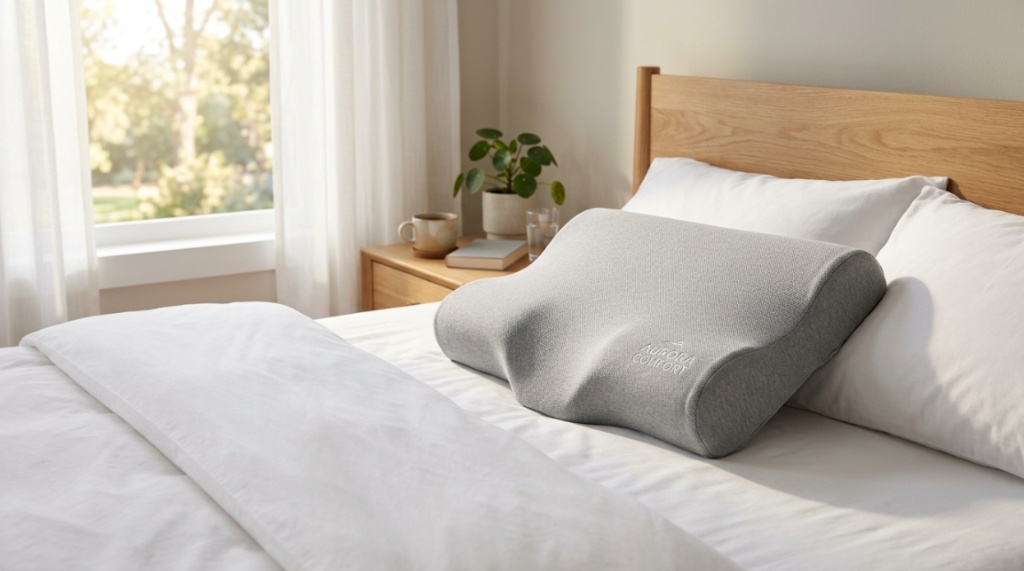
These pillows typically feature a scooped-out center or a “butterfly” wing design. The central depression cradles your head while the raised edges support your neck. This positioning prevents your tongue from collapsing backward, which is the primary trigger for obstructive sleep apnea. Additionally, the elevated sides allow you to sleep on your side, which is the recommended position for apnea sufferers.
Cervical Support vs. Standard Comfort
Standard pillows are often too soft, allowing your head to sink and misalign your spine. A cervical support pillow maintains the natural “C” curve of your neck. This isn’t just about comfort—it is about biomechanics. When your neck is aligned, your trachea and pharynx stay open, significantly reducing apneic events during the night.
Why Regular Pillows Fail CPAP Users
If you use a CPAP machine, you know the struggle of the mask pushing against the pillow. Standard pillows crush the mask, causing air leaks and leaving red marks on your face. Specialized pillows feature cutouts on the sides specifically for mask clearance, keeping the seal intact all night long.
Which Pillow Shape Works Best for Side Sleepers?
For side sleepers, the goal is to fill the gap between your shoulder and neck to keep your spine straight. The best options are tall, firm contoured pillows or wedge pillows that elevate your upper body. Gravity is your enemy when lying flat; elevating your torso reduces airway collapse.
Contour Pillows with Side Cutouts
These have a depression in the middle for your head and raised “wings” on either side. When you sleep on your side, you rest your face in the lower groove, which prevents the pillow from pushing your mask into your face. This design is ideal for CPAP users who toss and turn frequently.
Wedge Pillows for Gravity Assistance
A wedge pillow raises your head, neck, and chest at an angle of 30 to 45 degrees. This is highly effective for central sleep apnea and acid reflux, which often coexists. However, wedges can be impractical for active sleepers; you might slide down. Consider a wedge with a non-slip base or a memory foam top layer for grip.
Positional Therapy Pillows
These are full-body pillows that run the length of your body. They prevent you from rolling onto your back, where apnea is most severe. By hugging this pillow, you force your body to stay on your side, reducing the number of airway obstructions without needing a machine.
Why Does Pillow Height Matter for Airway Resistance?
Pillow height, or loft, determines the angle of your neck. Too high, and your chin tucks into your chest, closing the airway. Too low, and your head tilts back, straining the neck muscles. The optimal loft places your ear directly above your shoulder, creating a straight line from your neck to your spine.
Finding Your Perfect Loft Measurement
Measure the distance from your shoulder edge to your ear when lying on your side. This measurement is your ideal pillow height. Most side sleepers need a loft of 4 to 6 inches. If you are broad-shouldered, you may need a loft of 6 inches or more; petite frames often require just 3 to 4 inches, Proper nutrition plays a crucial role in managing sleep disorders; if you want to sleep well? Avoid these foods.
Adjustable Loft Pillows: The Safe Bet
Since body types vary, an adjustable pillow filled with shredded memory foam is the safest choice. You can remove or add filling to customize the loft. This flexibility is crucial in California, where seasonal allergies can change how you breathe. A customizable loft allows you to adjust for congestion on any given night.
The Chin Tuck Dangers of Excess Loft
Sleeping on a pillow that is too tall is as bad as sleeping flat. It forces your chin to compress your hyoid bone, narrowing the pharynx. This increases your AHI (Apnea-Hypopnea Index) score. If you wake up with a sore neck or a feeling of strangulation, your loft is likely too high.
How Does Material Choice Impact Temperature Regulation?
Memory foam isolates heat, which can cause night sweats and discomfort. Since California often experiences warm nights, choosing a cooling material is essential for uninterrupted sleep. Your pillow should wick moisture and dissipate heat to prevent overheating.
Gel-Infused Memory Foam vs. Traditional Foam
Gel-infused foam is designed to draw heat away from the skin, feeling cooler than standard foam. However, it is still dense and can lack breathability. Look for open-cell foam structures that allow air to flow through the material rather than trapping it.
Latex: The Natural Cooling Alternative
Natural latex has a unique honeycomb structure that allows superior airflow. It is more expensive, but it is also more durable than memory foam, often lasting over five years. Latex is resistant to dust mites—a major trigger for allergy-related apnea in California.
Breathable Covers and Active Cooling
Look for covers made of Tencel, bamboo, or cotton with a high thread count. Some modern pillows feature “phase change” materials that absorb and release heat to maintain a neutral skin temperature. These are beneficial if you live in hotter climates like Fresno or Bakersfield.
Can a Pillow Actually Replace a CPAP Machine?
No. A pillow is an accessory, not a cure. If you have moderate to severe obstructive sleep apnea, a CPAP machine remains the gold standard. However, a pillow can help you tolerate your CPAP therapy better by reducing mask leaks and allowing you to sleep in a more favorable position.
Positional Apnea: When It Might Help
If your apnea is classified as “positional” (occurring primarily on your back), a wedge or full-body pillow that keeps you on your side might significantly reduce your AHI. Some studies suggest that positional therapy can reduce AHI in mild cases by up to 50%.
The Role of Chin Straps and Buckwheat
For some, a buckwheat hull pillow provides a firm, cooling surface that conforms to the head shape. This can help keep the jaw in a forward position. However, these pillows are noisy and heavy. They are not a replacement for air pressure, but they can be part of a comprehensive approach.
When to Consult a Sleep Physician
If you still feel exhausted after using a specialized pillow for two weeks, consult a physician. The pillow is not the problem; your airway anatomy is. A pillow cannot fix a deviated septum or enlarged tonsils. It is merely a tool to optimize your environment.
Which Features Should You Prioritize for CPAP Compatibility?
If you wear a mask, compatibility is the top priority. You need to ensure there is no space between the mask and the pillow that breaks the seal. Look for pillows with precise cutouts designed for standard mask sizes,If you are ready to upgrade your rest, explore the top-rated options for the best sleep apnea pillow California sleepers have tested and approved.
Side Cutouts for Full-Face Masks
Full-face masks cover your nose and mouth. They require a pillow with deep side channels to accommodate the bulky cushioning. Without these channels, the mask gets displaced, and you experience turbulent air leaks that disturb your sleep.
Nasal Mask Compatibility and Tube Management
Nasal pillows (the mask type) require less clearance, but you still need a spot for the hose. Many high-end pillows feature side “hose channels” to route the breathing tube, preventing tangling and reducing the resistance on the mask interface.
Adjustable Firmness Levels
If you part your hair or sleep on your stomach (not recommended for apnea), you might prefer a softer feel. Look for pillows that offer medium-firm options. A pillow that is too soft defeats the purpose of cervical support, while a brick-like firm pillow causes pressure points.
What Is the Lifespan of a Sleep Apnea Pillow?
Depending on the material, you should replace your pillow every 18 to 24 months. Over time, foam breaks down, and dust mites accumulate. A degraded pillow loses its structural integrity, causing your head to sink and your airway to narrow again.
Signs Your Pillow Is Degrading
If you find yourself folding the pillow in half to get comfortable, or if you wake up with a stiff neck despite using a contoured pillow, it is time for a replacement. Also, if the pillow has visible yellowing or a musty smell, the materials are breaking down.
Washing and Maintenance Tips
Most memory foam pillows cannot be washed; they must be spot-cleaned. Use a removable, washable cover to protect the core. Wash the cover weekly in hot water to kill allergies and dust mites. Air out the foam core in the sun for a few hours every month to remove trapped moisture.
Durability of High-End Materials
While a cheap pillow might cost $20, a high-quality latex or gel foam pillow can go for $150 or more. However, the higher price tag buys durability. Latex can last up to seven years, making it more cost-effective than replacing a cheap foam pillow every year. When you consider the cost of a CPAP machine, investing in a good pillow is a low-cost insurance premium for better health.
How to Choose the Right Size for Your Body Frame?
The size of the pillow should correlate with your body weight and shoulder width. A standard 20×26-inch pillow might be too small for a 6-foot-tall man, causing his head to slide off the contour. Look for “king” or “queen” sizing with extra depth.
Petite Frames and Low Lofts
For individuals under 5’4″, a low-profile pillow (2-3 inches) is often best. High lofts push the head too far up, creating discomfort. Smaller frames require less lift to achieve alignment.
Large Frames and Broad Shoulders
Bodybuilders or individuals with broad shoulders need a height of 5-6 inches. The contour must be deep enough to accommodate the width of the shoulder. Never try to “fix” a low loft by stacking two pillows—this creates an unstable, unsafe sleeping surface.
Weight Distribution and Pillow Density
Heavier sleepers exert more pressure on the pillow. If you are over 200 pounds, you need a high-density foam with high ILD (Indentation Load Deflection) ratings. Low-density foam will compress completely, causing your head to hit the mattress below.
Is a Buckwheat or Water Pillow Better for Apnea?
Both are alternatives to foam but serve different functions. Buckwheat provides firm, immovable support, while water pillows allow you to adjust the loft by adding or removing liquid. Both excel at contouring, but they have distinct learning curves.
Pros and Cons of Buckwheat Hulls
Buckwheat does not trap heat and offers excellent airflow. It molds to your head but does not spring back. This lack of “give” means you must align your head perfectly. The trade-off is that they are noisy and heavy; if you change positions frequently, the sound of shifting hulls might wake you up.
Pros and Cons of Water-Filled Pillows
Water pillows offer precise loft adjustability. They effectively distribute pressure, much like a waterbed. However, they can be heavy, and the water will absorb body heat unless you use a barrier layer. They are excellent for keeping the neck in a neutral position because they do not push back like foam.
Which One Offers Better Airway Stability?
For airway stability, buckwheat wins. Because it does not compress under pressure, it does not allow for sudden shifts in head position. Water pillows can “slosh,” causing subtle head movements that might compromise the fit of a CPAP mask.
How Does a Pillow Interact with Other Sleep Aids?
Your pillow is part of a system. If you use a chinstrap to keep your mouth closed, a too-tall pillow will interfere. If you use nasal strips, the angle provided by a wedge pillow can enhance their effectiveness by reducing the gravitational pull on your soft palate.
Combining with Mouth Guards
Oral appliances (mandibular advancement devices) work best when the jaw is not compressed. A contour pillow with a soft center allows the appliance to sit comfortably without putting strain on the temporomandibular joint.
Optimizing the Mattress Connection
If your mattress is too hard, the pillow needs to be thicker to compensate. If your mattress is sinking, your pillow will tilt regardless. Ensure your bed base is solid. A pillow is the final adjustment—the foundation must be stable first.
The Role of Humidity in California
In coastal California, high humidity can make latex pillows last longer, but it can also make foam pillows retain moisture. In drier inland areas, foam dries out and becomes brittle, cracking over time. Consider your micro-climate when selecting materials.
Frequently Asked Questions
Is a soft or firm pillow better for sleep apnea?
Firm is generally better because it prevents your head from sinking, which kinks the airway. However, “firm” must be balanced with “low loft.” A firm, flat pillow that aligns the neck is superior to a soft, fluffy pile that lifts your head too high. Aim for a medium-firm rating with a height that matches your shoulder width.
Can a pillow help with CPAP mask leaks?
Yes, significantly. Pillows with side cutouts provide a dedicated space for your CPAP mask, allowing the seal to sit flush against your skin rather than being pressed against fabric. This reduces the friction that causes mask displacement and air leakage throughout the night.
How long does it take to adjust to a cervical pillow?
Most users need a 3 to 7-day adaptation period. Your neck muscles are used to being stretched or compressed by a standard pillow. A contour shape forces your muscles to relax into a new position. If you wake up sore after a week, your loft is likely incorrect.
Does sleeping on my back help prevent apnea events?
No. Sleeping on your back is actually the worst position for obstructive sleep apnea. Gravity pulls your soft palate and tongue backward, blocking the airway. Side sleeping is recommended. A full-body pillow can help condition you to stay off your back.
Are cooling gels in pillows safe for long-term use?
Yes. The gel is encased in the foam and does not leak. Ensure the gel is non-toxic and free of heavy metals. These ingredients help regulate the microclimate, reducing night sweats that disrupt the sleep cycle.
Can I use a memory foam pillow if I sleep on my stomach?
It is highly discouraged. Stomach sleeping twists the neck to the side, exacerbating airway obstruction. If you cannot break the habit, use the thinnest pillow possible, like a 1-inch fleece pad, to minimize the… angle. Ideally, use a firm wedge to train yourself to sleep on your side.
What is the difference between a anti-snoring pillow and an apnea pillow?
Anti-snoring pillows focus on slight neck extension to open the throat. Apnea pillows are more aggressive, incorporating deep cutouts for CPAP masks and higher side wings for positional support. While they share features, apnea pillows prioritize medical device integration over simple snore reduction.
Conclusion: Prioritize Alignment for Better Breathing
Living with sleep apnea in California is challenging enough without the added burden of an incompatible pillow. The secret isn’t just buying the most expensive model; it is about matching the loft to your body frame, the material to your temperature needs, and the shape to your CPAP equipment. By prioritizing a pillow that supports cervical alignment and eliminates mask leaks, you are taking a vital step toward protecting your heart, brain, and energy levels. Don’t settle for a generic pillow that fails you every night. Evaluate your sleeping position, measure your shoulder height, and make the switch to a specialized design today. Your body will thank you with deeper, more restorative sleep.