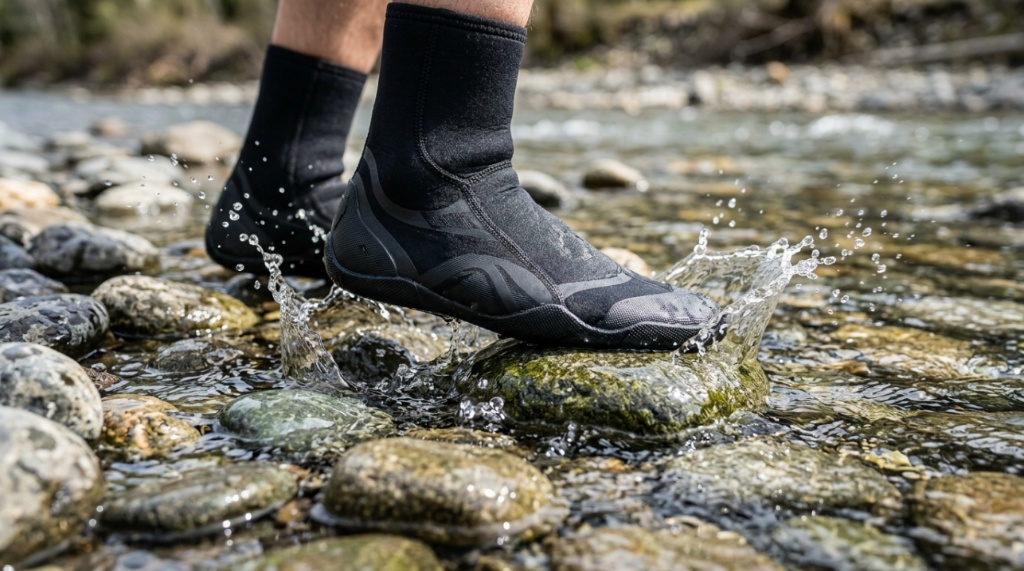
You just unpacked a fresh pair of water socks, hit the shoreline, and within twenty minutes, you feel a sharp rock poking through the sole. Or worse, the sock slips off your heel and fills with sand. We have all been there. The problem is simple: most people buy water socks based on price alone or a decent photo online, only to discover they are flimsy, uncomfortable, or useless for actual diving.
Whether you are wading into a rocky shore or snorkeling along a coral reef, your feet need reliable protection. Let us break down exactly how to choose water socks that fit, last, and perform without overpaying for hype or brand names.
What Are Water Socks and Why Do You Need Them?
Water socks are lightweight, quick-drying footwear designed to protect your feet in wet environments. Unlike regular socks, they are made from neoprene, spandex, or a blend of synthetic materials that grip your foot and shield against sharp objects, hot sand, and rough surfaces. They also prevent slipping on wet boat decks or slick rocks.
You need them if you plan to spend time in water where the ground is unpredictable. Lakes, rivers, beaches, and rocky shorelines all present hazards like broken shells, glass, and jagged stones. Water socks provide a thin barrier that keeps you comfortable and safe without the bulk of water shoes. They are also excellent for preventing blisters inside fins during longer dive sessions.
For divers and snorkelers, water socks serve a dual purpose: foot protection and fin comfort. Wearing them under fins reduces chafing and makes fin removal easier. This is especially valuable during repetitive diving or extended swims.
How Do Water Socks Differ from Water Shoes?
Water socks are lightweight, flexible, and fit snugly like a second skin. Water shoes have thicker rubber soles, more structure, and a heavier build. The core difference comes down to sole thickness and intended use.
Water socks typically have a thin rubber or textured sole ranging from 1mm to 3mm. This allows you to feel the ground while still offering protection from small debris. Water shoes have soles of 4mm or more, providing rigidity and impact protection suitable for hiking in wet conditions.
| Feature | Water Socks | Water Shoes |
|---|---|---|
| Sole thickness | 1mm–3mm | 4mm–8mm |
| Flexibility | High | Moderate |
| Best for | Diving, snorkeling, swimming | Kayaking, hiking, rocky beaches |
| Fit | Snug, like a sock | Looser, like a shoe |
| Drying time | Fast | Moderate |
If your primary activity is diving or snorkeling, water socks offer better dexterity and comfort inside fins. If you plan to walk long distances over rough terrain, water shoes provide more support. Choosing the wrong type leads directly to wasted money and discomfort.
Which Materials Offer the Best Balance of Durability and Affordability?
Neoprene is the most common material for water socks at budget-friendly prices. It provides good insulation, flexibility, and durability for the cost. A 2mm neoprene sock offers enough protection for most recreational diving without breaking the bank.
Nylon and spandex blends are also popular. They dry faster than neoprene and offer excellent stretch, but they wear out faster against rough surfaces. For affordable diving water socks, look for a neoprene body with reinforced stitching at high-stress points like the heel and toe. This combination gives you the best value for money.
Avoid socks made entirely from thin mesh material. They are cheap but offer almost no protection. You will end up replacing them after a single season, which makes them more expensive in the long run.
How Should Water Socks Fit for Diving and Swimming?
Water socks must fit snugly without being restrictive. A proper fit means your toes touch the tip of the sock lightly when standing, with no extra material bunching at the heel. If there is slack, the sock will slide around inside your fin and cause blisters.
Try this simple test: put the sock on and wiggle your toes. You should have full range of motion without the sock stretching out of shape. Then, slide your foot into your fin. The sock should compress slightly but not fold or wrinkle. Any bunching will create pressure points underwater.
For budget diving socks, sizing up is a common mistake. A loose sock feels comfortable on land but becomes a liability in the water. Neoprene compresses slightly when wet, so a snug fit dry means a perfect fit wet. If you are between sizes, opt for the smaller size if your feet are narrow, or the larger size if you have wide feet. Check the manufacturer’s size chart carefully because sizing varies widely between brands.
The frustration of wasted money hits hard when your gear fails mid-adventure. Buying the right pair does not have to be a guessing game if you know what actually matters. This guide exists to help you cut through the noise, identify quality features, and find truly affordable diving water socks budget diving socks that protect your feet and your wallet.
What Features Make a Water Sock Worth Buying on a Budget?
Not all budget water socks are created equal. Look for these specific features to ensure you get real value:
- Reinforced heel and toe panels – These are the first areas to wear out. Extra material here extends the life of the sock significantly.
- Flatlock seams – Flat seams reduce chafing inside your fins. Avoid socks with bulky internal stitching.
- Non-slip sole – A textured rubber or silicone grip on the bottom prevents slipping on wet surfaces. This is non-negotiable for safety.
- Quick-dry lining – Mesh or hydrophobic linings dry in minutes, which prevents odor and bacterial growth.
- Reinforced ankle cuff – A snug cuff keeps sand and debris out. Elastic cuffs work well if they are not too tight.
Socks with all these features usually fall in the $15–$35 range. Anything below $10 is likely too thin to last. Paying a little more upfront for reinforced construction saves you from buying replacements every few months.
Can You Use Water Socks for Other Activities Like Kayaking or Hiking?
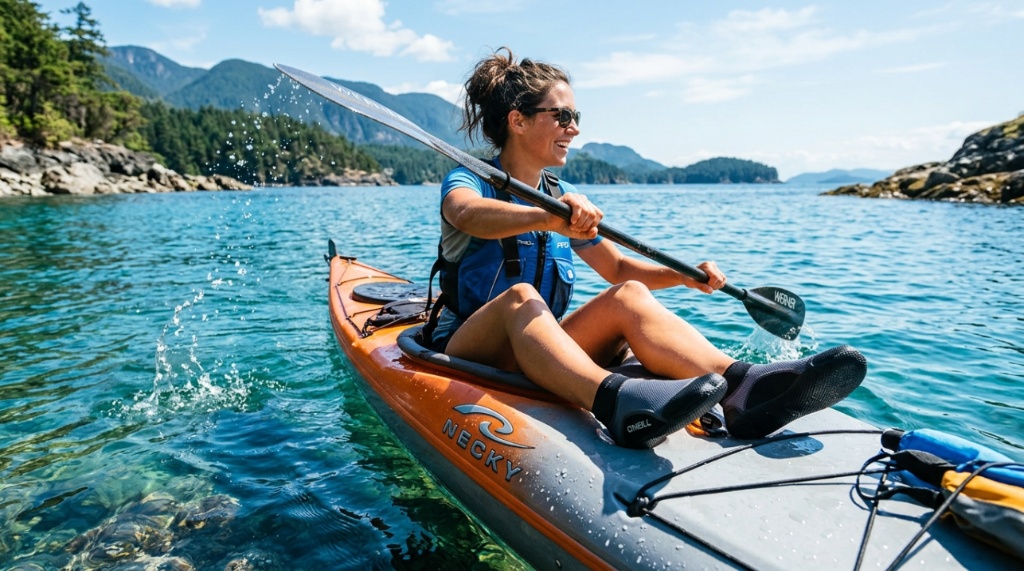
Yes, water socks work well for kayaking, paddleboarding, and light hiking on wet terrain. They provide traction on slippery surfaces and protect your feet from hot sand or sharp rocks. However, they are not designed for long-distance hiking on dry, rocky trails. The thin sole offers little cushioning against repeated impact.
For kayaking or canoeing, water socks are excellent because they dry fast and fit snugly inside the boat. They also prevent your feet from sliding on the hull. If you plan to do portaging where you carry your boat over rocks, consider water shoes instead of socks for better underfoot protection.
At the gym or yoga studio, water socks are sometimes used for hygiene reasons on shared mats. They work fine for this purpose, but standard athletic socks are usually more comfortable.
How Do You Care for Water Socks to Make Them Last Longer?
Rinse your water socks with fresh water immediately after each use. Saltwater, chlorine, and sand degrade neoprene and elastic fibers over time. A quick rinse under a tap removes the corrosive elements that shorten lifespan.
Hand wash with mild soap if they get particularly dirty. Avoid machine washing and drying. The heat and agitation break down the neoprene and ruin the fit. Air dry them in the shade, away from direct sunlight. UV rays cause neoprene to crack and lose flexibility.
Store them flat or loosely rolled. Do not fold them tightly or stack heavy objects on top. Proper care can double the life of a budget water sock, giving you 2–3 seasons of regular use instead of just one.
When Should You Replace Your Water Socks?
Replace your water socks when you notice holes, thinning fabric, or stretched elastic. A small hole at the toe can be patched temporarily, but once the sole separates from the body, the sock is done. Worn-out socks compromise protection and comfort.
Another sign is persistent slipping inside your fins. If the sock no longer grips your foot, it will cause blisters and reduce fin efficiency. Budget socks typically last 6–12 months with regular weekend use. If you dive weekly, expect to replace them every 6 months.
Do not wait until the sock falls apart mid-dive. Inspect them after every few uses. Catching wear early lets you order a replacement before your next trip.
How Do You Choose the Right Thickness for Your Environment?
Water sock thickness ranges from 1mm to 5mm. For warm water above 75°F, 1mm to 2mm is sufficient. It provides protection without overheating your feet. For cooler water between 60°F and 75°F, 3mm offers a good balance of insulation and dexterity. Below 60°F, consider 5mm boots rather than socks for proper thermal protection.
Thicker socks also provide more cushioning against sharp surfaces. If you know the water bottom is rocky or covered in barnacles, go with 3mm. If you are walking on sandy beaches or boat decks, 2mm is plenty. Matching thickness to your environment prevents both discomfort and unnecessary spending on more material than you need.
While thick soles are great for jagged coral reefs, heavy footwear can quickly ruin a good swim. If you want something that feels like a second skin but still shields you from sharp shells, check out our guide on lightweight water socks without losing protection to find that perfect balance.
Is It Cheaper to Buy Water Socks Online or in Stores?
Online retailers generally offer lower prices and a wider selection than physical stores. You can compare features, read reviews, and find budget options that big-box stores do not carry. The downside is you cannot try them on before buying. Shipping costs can also add up if you need to return a pair for sizing issues.
Local dive shops allow you to test the fit, but prices are often 20–40% higher. If you know your exact size from a specific brand, ordering online is the better deal. If you are new to water socks, visit a store first to determine your size, then buy online for the best price.
Amazon and specialty dive gear sites frequently run sales on last season’s models. These are often identical to current models but cost significantly less. Set a price alert and wait for a discount if you are not in a hurry.
Common Mistakes People Make When Buying Budget Water Socks
- Buying too large – Loose socks cause blisters and slide off in the water. Always size down if unsure.
- Ignoring seam construction – Rough seams chafe your feet. Flatlock seams are worth the extra dollar.
- Choosing style over function – Cute prints do not protect your feet. Focus on material, thickness, and reinforcement.
- Forgetting to check return policy – Online purchases should have a hassle-free return option for sizing issues.
- Assuming all budget socks are the same – A $12 pair can fall apart in a month while a $25 pair lasts a year. Read reviews carefully.
Avoid these pitfalls, and you will get real value from your purchase rather than frustration.
Frequently Asked Questions
Do water socks protect against jellyfish stings?
Water socks provide a physical barrier that can prevent minor stings from jellyfish tentacles. However, they offer no protection against venomous species. For serious protection, wear a full wetsuit or rash guard.
Can you wear water socks without fins?
Yes, water socks work perfectly as standalone footwear for swimming, wading, or beach walking. They are comfortable and provide basic protection on sand and small rocks.
Are water socks machine washable?
It is not recommended. Machine washing can damage the neoprene and elastic. Hand wash with mild soap and cold water, then air dry in the shade.
How do you stop water socks from smelling?
Rinse them thoroughly after every use and dry completely before storing. Occasional washing with a mixture of water and white vinegar kills odor-causing bacteria. Avoid leaving them damp in a bag.
Do water socks work on hot sand?
Yes, they provide protection from hot sand better than bare feet. However, thin 1mm socks may still let heat through on extremely hot days. Thicker 3mm socks offer better insulation.
What is the difference between water socks and dive boots?
Dive boots are thicker (5mm+), have hard rubber soles, and are designed for scuba diving with open-heel fins. Water socks are thinner, more flexible, and work with both open-heel and full-foot fins.
Can children wear the same water socks as adults?
Children need properly fitting socks sized for their feet. Adult socks are too large and will not stay on. Many brands offer youth sizes specifically designed for smaller feet and lighter use.
Final Thoughts on Choosing Water Socks Without Wasting Money
Buying the right water socks comes down to matching the sock to your activity, getting the fit right, and choosing durable materials within your budget. Focus on reinforced heels and toes, flatlock seams, and the correct thickness for your water temperature. Avoid common sizing mistakes and do not let a low price trick you into buying something that will fail quickly.
Remember that a good pair of water socks is an investment in comfort and safety. You do not need to spend a fortune, but you should spend wisely. Take the time to read reviews, compare features, and buy from a reputable source. Your feet will thank you after a long day in the water.
If you are looking for a reliable starting point, check out the selection of affordable diving water socks budget diving socks that meet the quality standards discussed here. Pick a pair that fits your needs, and enjoy your next water adventure with confidence.