
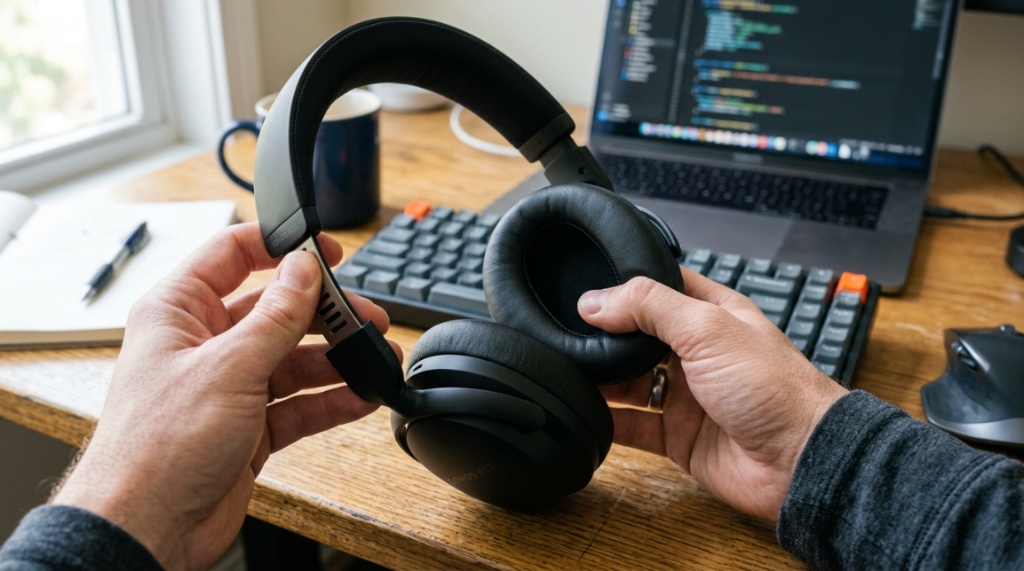
You know the struggle: you’re drowning in a sea of specs, prices, and conflicting reviews. Every brand claims to be “premium,” yet your budget tells a different story. The fear of wasting money on a shiny but mediocre pair is real, but so is the desire for excellent sound. This guide is your map through that maze, showing you exactly how to secure quality headphones without overspending by focusing on what genuinely matters, not just what the marketing tells you.
What Does “Quality Headphones Without Overspending” Actually Mean?
It means achieving the perfect balance of sound performance, build durability, and comfort at a price that feels fair for what you get. Crucially, it is not about buying the cheapest option available. Instead, it is about maximizing value by understanding where your money has the most significant impact on your listening experience.
Redefining Value Beyond the Price Tag
Value is a combination of the price you pay and the performance you receive over time. A $60 pair of headphones that lasts three years and sounds great offers better value than a $150 pair that breaks in a year. This perspective shifts your focus from the lowest upfront cost to the lowest long-term cost of ownership.
The Real Cost of “Cheap” Headphones
When you buy an ultra-budget pair, you often face hidden costs. The sound may be muddy with exaggerated bass, the build may creak and crack, and ear cushions may peel within months. This leads to a shorter lifespan and the need for a replacement sooner, ultimately costing you more and causing constant frustration.
Understanding the “Sweet Spot” Price Range
For most people, the “sweet spot” for quality headphones without overspending lies between $80 and $200. In this range, you’ll find features like balanced drivers, solid build materials, and comfortable padding that provide approximately 80% of the performance of $500+ flagships for a fraction of the cost.
Why Do Headphone Prices Vary So Much?
The price of headphones is determined by several core components: the driver quality, materials used for the chassis, the sophistication of the tuning or signal processing, and the brand’s research and development costs. Understanding this breakdown helps you avoid paying for unnecessary branding and instead focus on tangible improvements.
The Components That Matter Most for Sound
Two key elements dictate sound quality: the driver (which produces the sound) and the DAC/amp (which powers it). Look for drivers that are well-tuned rather than just large. A well-implemented 40mm driver can sound better than a poorly tuned 50mm one. Paying for clarity in mids and highs, rather than just booming bass, is a better indicator of quality.
Where Brands “Get You” with Pricing Tricks
Be wary of spending on features you don’t need. We see this heavily with “premium” materials like gold-plated hinges or branded fabric that adds cost but not performance. Additionally, some brands charge a huge premium for their name, not for a unique sound signature. Avoid these traps to maintain your budget.
How to Spot Hidden Cost-Cutting in Expensive Models
Sometimes high prices hide poor decisions. Check for thin headband padding that will compress over time, non-replaceable cables, and pressure points that cause fatigue. Reading tech forums and user reviews about long-term comfort and durability is far more insightful than the promotional “unboxing” reviews.
Which Headphone Type Offers the Best Value for Your Money?
For most casual listeners and even audiophiles on a budget, wired over-ear headphones offer the best pure value because they don’t pay for batteries, Bluetooth chips, or DACs. However, if portability is your priority, a good pair of wireless earbuds is a worthy investment. The best choice depends entirely on your primary use case,Just like outdoor enthusiasts learn how to make amsteel rope last longer through proper care and tension management, treating your audio gear’s cables and structural joints with care ensures your investment lasts for years.
Wired Over-Ear vs. Wireless for Cost Efficiency
Wired headphones provide a direct connection, meaning every dollar you spend goes toward driver and build quality rather than electronics. Wireless models require you to pay for convenience and battery tech. If you’re primarily sitting at a desk, choose wired; for commuting, wireless is worth the extra investment.
The Rising Value of Wired IEMs (In-Ear Monitors)
If you truly want the best sound quality for the lowest price, wired IEMs are a secret weapon. For under $50, brands like Moondrop and Truthear offer levels of detail and accuracy that would cost $300 in a pair of over-ear headphones. They are small, comfortable, and fit easily in a pocket.
Adapting Your Choice to Your Lifestyle
If you work in a noisy office or travel frequently, active noise cancellation (ANC) is a necessity, pushing you toward wireless. However, if you listen in quiet rooms, spending the same money on a wired set will give you a much richer and more detailed audio experience.
How to Judge Sound Quality Without Being an Audiophile?
You don’t need golden ears to hear the difference. Listen for clarity (can you distinguish individual instruments?), soundstage (does it feel like the music surrounds you?), and bass control (is it punchy, or just muddy?). A good pair should make you notice details in familiar songs you’ve never heard before.
Simple Listening Tests for Beginners
Try a test playlist with acoustic music, jazz, and deep electronic bass. If the acoustic guitar sounds natural and not tinny, and the bass doesn’t overpower the vocals, the headphones are well-tuned. Use a track with a live audience to see if you can sense the “spaciousness” of the recording—that is soundstage.
Decoding Frequency Response Specs That Matter
Ignore the extremes (20Hz-20kHz) which every pair claims. Instead, look for a graph or description that mentions a slight boost in the upper bass (around 100Hz) and a smooth treble. A “V-shaped” curve is fun for pop but not accurate; a “neutral” profile is safer for listening to all genres without fatigue.
Why “Burn-In” Is an Outdated Concept
You may see advice about “burning in” headphones for 100 hours. Modern research and engineering show that headphones sound consistent from day one. The “burn-in” is actually your brain getting used to the sound signature. Don’t let this myth delay your judgment on whether you like the sound immediately.
Can You Get Premium Features Like ANC on a Budget?
Yes, you can. Active Noise Cancellation (ANC) used to be a premium feature, but now it is available on models under $100. The key distinction is that budget ANC filters out constant low-frequency hums (like airplane engines or air conditioners) but does little for sudden, sharp noises like voices or keyboard clicks.
The Truth About Cheap Noise Cancellation
Cheap ANC ($50-$80) often affects sound quality, adding a subtle “hiss” or pressure feeling. A better strategy is to look for “hybrid ANC” which uses multiple microphones to capture more sound. Even if it’s not perfect, even reducing 70% of engine noise can save your sanity on a commute.
Passive Isolation vs. Active Noise Cancellation
Before paying for ANC, consider passive noise isolation. A tight-sealing over-ear headphone or a well-fitted IEM can block up to 30dB of noise without using any power. This preserves sound purity and costs much less. Try a good IEM with foam tips; usually, the seal is enough for most environments.
Are Microphone Quality and APP Support Important?
If you take calls, check the microphone quality. Many budget headphones use cheap mics that sound muffled. In terms of app support, you may be paying for features like EQ adjustments. Ensure the app is actually functional and not just a marketing shell, as poor apps can cause connection drops.
When Is the Best Time to Buy Headphones for Maximum Discounts?
Timing your purchase can save you an additional 20-30%. The best times are during major retail events like Black Friday, Prime Day, and after Christmas (to clear stock). Additionally, look for new model releases—when a newer version drops, the previous generation’s price plummets.
Seasonal Sales Calendar for Headphones
Mark your calendar: Black Friday (November) is the big one, but don’t overlook Back-to-School (August) and End-of-Financial-Year sales. If you need them for gifts, buy them just after Christmas in late December or early January. Refurbished models also get massive discounts during these windows.
The Refurbished Market: A Goldmine for Value
Buying “Certified Refurbished” directly from manufacturers like Sony, Sennheiser, or Anker is a smart strategy. These units are usually returns or have minor cosmetic flaws, but they are fully tested and come with a warranty. This can often get you a $300 pair of headphones for less than $150.
Old Flagship Models Are the Best Bargains
Instead of buying the new mid-range, look at last year’s flagship. The Sony WH-1000XM4, which was top-tier a few years ago, is now often priced below the newer, mid-tier XM5 or other competitors but still outperforms them in almost every way. Always check older specs against new releases.
How to Ensure Your New Headphones Last for Years?
Build quality is just as critical as sound. Look for metal reinforcement in the headband slider mechanism—this is the #1 breakage point. Also, ensure the cable (if wired) is detachable. A detachable cable means you replace a $10 cable instead of a $200 headphone when it gets snagged.
Materials to Look For and to Avoid
Avoid “glossy plastic” which scratches easily and looks cheap fast. Prefer matte finishes and aluminum yokes. For comfort, protein leather (PU) feels good but wears out in 2 years; real leather or breathable fabric (like in the Hifiman Sundara) lasts longer and is more comfortable in hot climates—though costlier.
Proper Care and Storage Practices
Invest $10 in a hard-shell case. Never wrap the cable tightly around the headphones; this wears out the wires internally. Store them in a dry place and clean ear pads monthly with a microfiber cloth to prevent oils from breaking down the material. These simple habits extend life significantly.
Repairability: The Ultimate Test of Value
Check if pad replacements and cables are available for the model. Brands like V-Moda and Beyerdynamic are famous for easy repairs. If you buy a product where the pads are glued and the battery is internal, you are buying a disposable item, regardless of the price.
Which Budget Brands Consistently Deliver on Quality?
Several brands have built a reputation for offering quality headphones without overspending consistently. For wired sound, look at AKG, Philips, and Superlux. For wireless, Anker (Soundcore) and Edifier offer excellent battery life and features at aggressive price points. For IEMs, Moondrop and Truthear are industry disruptors.
The Rise of Chinese Audio Brands
Companies like Moondrop, Truthear, and 7Hz are challenging established giants by selling directly to consumers via sites like Aliexpress and Amazon. They skip middlemen and spend money on drivers, not advertising. This results in astonishing value for those willing to try a less well-known name.
Established Giants: Are They Worth the Premium?
Sony and Sennheiser still hold the crown for wireless tech and customer service. If you need specific tech like LDAC codecs or a bulletproof app, paying the “brand tax” might be worth it. However, for pure audio performance alone, the smaller brands often win on cost-to-performance ratio.
Key Models That Are Proven Winners
Look out for the Soundcore Q30 (often under $80) for wireless, AKG K361/K371 (under $100) for wired studio-quality sound, and Truthear x Crinacle Zero (under $50) for IEMs. These are community favorites that have been tested and praised by thousands of users for years.
How to Filter Online Reviews to Find Authentic Info?
The best way to filter is to ignore the 5-star “this is amazing” reviews and the 1-star “it broke” rage reviews. Focus on the 3-star and 4-star reviews. These usually come from users who describe specific pros and cons—like “bass is good but the midrange is reccessed”—which is the info you actually need.
Spotting Fake Reviews and Paid Hype
Look for verified purchases. Watch for generic wording and exclamation points that feel unnatural. Use websites like RTINGS.com or Crinacle’s measurements, which provide objective frequency response graphs. Pair that data with subjective user experiences to form a complete picture.
Using Reddit and Forums Effectively
Subreddits like r/headphones and r/BudgetAudiophile are goldmines. Use the search function to find posts about your specific model, but don’t just read them—read the comments where users often debate and offer alternative recommendations you might not have considered.
The 80/20 Rule of Review Reading
Spend 80% of your research time analyzing the negative aspects of the product and only 20% on the positive. If the negative issues are acceptable to you (e.g., “it doesn’t have a case” or “the bass is too heavy”), then you’re making an informed decision. Focus on critical reviews to prevent regret.
Is Spending More on Cables and DACs Necessary?
For most listeners, absolutely not. The DAC (Digital-to-Analog Converter) built into your phone or laptop is already good enough for 99% of consumers. With budget headphones, you will not hear a difference with a $200 amplifier. Save your money until you step into the $500+ headphone territory where high-end electronics are necessary.
When Does an Amp Actually Help?
An amplifier is only needed if your headphones have very high impedance (over 80 ohms) or low sensitivity. Most consumer headphones, especially those in the budget category, are designed to be driven easily by a laptop. If they get loud enough on your phone without distortion, you likely don’t need a DAC.
Buying Better Ear Pads Instead of New Headphones
One of the smartest upgrades is swapping ear pads. Sometimes the stock pads are thin or itchy. Buying high-quality memory foam pads from brands like Brainwavz (often $20-25) can fix comfort issues and sometimes even improve bass response. This is a better investment than a cable upgrade.
The Hidden Cost of “Upgrade Cables”
Unless your cable is cutting out, a new cable will not change the sound. Digital signals pass ones and zeros; analog is a simple electrical current. Don’t waste $50+ on a woven cable for aesthetics—put that money into a better pair of earmuffs or save it for the next upgrade. Focus on utility over vanity.
A Step-by-Step Guide to Testing Headphones in a Store
Bring your own music, known tracks, and a high-quality source (phone or DAP). Start with a volume where you feel safe (not painful). First, check comfort for 10 minutes. Then, listen to a bass-heavy track to check for distortion, a vocal track for clarity, and a busy orchestral track for separation.
Checklist for a Hands-On Evaluation
- Comfort: Does the headband distribute weight evenly? Any hotspots on ears?
- Isolation: Clap your hands; the sound should be muffled.
- Clarity: Listen to cymbals—are they crisp or harsh?
- Bass: Does the bass “thump” or does it vibrate the whole housing?
- Build: Twist the earcups—is there a creaking sound from plastic?
Testing Soundstage vs. Imaging
Soundstage is the perceived space (width/depth), while imaging is the precise placement of instruments in that space. Close your eyes and see if you can point to where the guitar is (left/right/center). Good imaging creates a “3D” bubble in your head, which is a sign of top-tier tuning.
Understanding Volume and Distortion Limits
Turn the volume up to 70-80% of your comfortable level. If you hear crackling or the bass becomes distorted, that’s a red flag. A quality headphone should remain clean and composed even at high volumes without clipping, as long as your source is not sending a distorted signal.
Throughout your search, remember to keep your priorities straight and ignore marketing “fluff.” By focusing on objective criteria and listening for specific traits, you can find excellent audio gear. If you are specifically looking for recommendations in a bustling market context, you can often find curated lists that highlight quality headphones without overspending, providing shortcuts based on expert testing and real-world feedback.
What Are the Common Mistakes to Avoid When Buying?
Don’t buy solely based on bass quantity; it often masks poor mids. Don’t ignore the weight—a 400g headphone will be a desk ornament after 30 minutes. And never buy a pair that you can’t return—flexibility is key to trying them at home. Finally, don’t be swayed by celebrity endorsements.
Mistake: Chasing the “Latest” Features
Features like multipoint Bluetooth are great, but if you don’t use them, they’re a waste of money. Similarly, hi-res audio certification is irrelevant if you only use Spotify. Prioritize the basics: sound, comfort, and battery life, then consider extras as nice-to-haves, not must-haves.
Mistake: Hiring Brands with Inconsistent Histories
Some brands have hit-or-miss quality across their lineup. A brand famous for one fantastic $100 headphone may have a terrible $60 one. Always check the specific model’s reviews, not just the brand’s reputation. Specific model reviews over their lifetime are more valuable than a brand halo.
Mistake: Overlooking the Importance of Weight
A heavy headphone (300 grams+) can cause neck strain and severe discomfort over time. Look for under 250g for over-ears. Lightweight models (150g) like the Philips SHP9500 are often preferred for long sessions because they disappear on your head, which is a sign of quality engineering.
Frequently Asked Questions
Can You Get Good Quality Headphones for Under $50?
Yes, especially in the IEM (in-ear monitor) category. Models like the 7Hz Zero or Moondrop Chu offer excellent clarity for under $30. For over-ear wireless, you’ll likely have to compromise on ANC and battery life at this price, but sound can still be decent for casual listeners.
Is It Better to Buy Headphones Online or In-Store?
In-store lets you test comfort and sound immediately but often has limited stock and slightly higher prices. Online offers better selection and reviews, but you cannot test them. The best approach is to try a model in-store to confirm comfort, then buy it online from a seller with a good return policy.
How Many Hours Is a Typical Headphone Lifespan?
A well-maintained pair of over-ear headphones should last 3–5 years with daily use. The main wear items are the ear pads (1-2 years) and the battery (2-3 years for wireless). When these fail, it doesn’t mean the headphone is dead—it means you need replacements.
Does a Higher Price Always Equal Better Sound?
No. Past a certain price point, you are paying for diminishing returns, rare materials, or brand prestige. A $200 headphone can sound 90% as good as a $1,000 one. The biggest difference lies in build quality, warranty, and niche tuning, not necessarily a giant leap in overall audio fidelity.
What Is the Most Durable Headphone Type?
Wired over-ear headphones with a metal headband are the most durable. Look for models with replaceable cables and ear pads, like the Beyerdynamic DT 770 or AKG K240. Wireless headphones with foldable hinges are more prone to breakage over time due to their mechanical complexity.
Should I Buy a “Studio” Headphone for Casual Listening?
Not necessarily. Studio headphones are designed for flat response and accuracy, which some find sterile or lacking in bass. However, they offer excellent clarity. If you like a “fun” sound with extra bass, you may prefer a consumer model. Try a neutral pair if you want to hear your music as the artist intended.
Conclusion
Buying quality headphones without overspending is a skill that comes down to research and self-awareness. It’s not about finding a mythical “cheap” product; it is about identifying what features you genuinely need and ignoring the flashy marketing that pushes you toward overspending. Whether you choose a wired IEM for pure sonic accuracy or a wireless over-ear for daily comfort, the key is to evaluate long-term value—durability, replaceability, and proven sound performance—rather than just the initial sticker price.
Start by setting a strict budget and then prioritize testing comfort and sound clarity. Use your familiar tracks as the test, trust verified reviews, and don’t be afraid to buy last year’s model or a certified refurbished unit. The perfect pair of headphones is out there, and it doesn’t require a four-figure budget. Take the time to define your priorities, follow the advice in this guide, and you will not only save money but also enjoy a significantly better listening experience every single day.
Ready to find your perfect match? Use the strategies outlined here and start your search today. Your ears will thank you—and so will your wallet.