
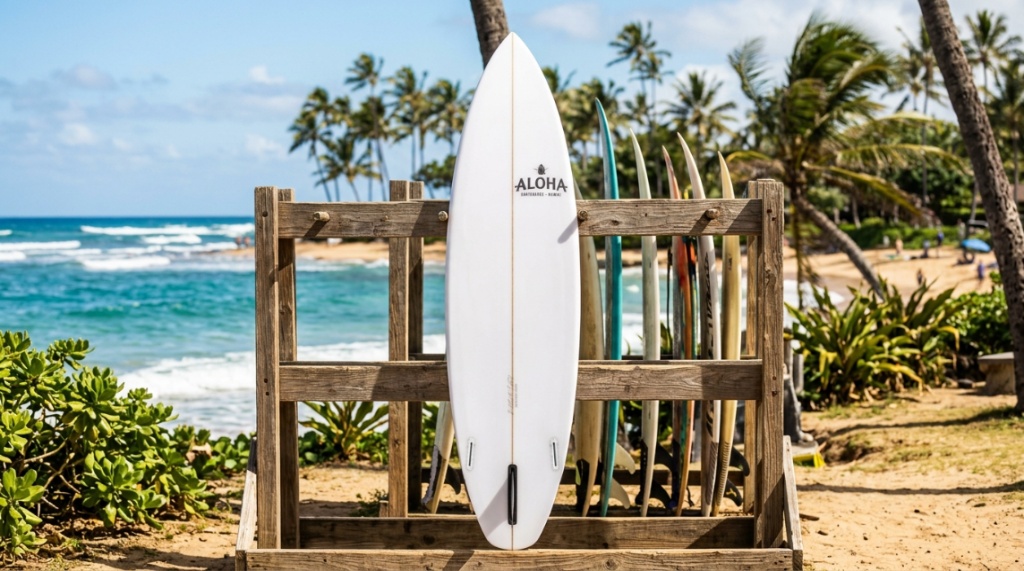
You just scored the perfect wave on the North Shore. You rinse your board, stash it in the garage, and head for a poke bowl. A week later, you grab the board and a pungent, musty smell hits you. Black specks dot the deck and the tail pad feels greasy. That is mold—Hawaii’s biggest enemy to surf equipment. The warm, humid air and frequent rain create a perfect breeding ground for fungi. If you want to protect surfboard from mold Hawaii, you need a specific strategy that goes beyond a simple rinse. This guide will show you exactly how to keep your board fresh, clean, and mold-free in the tropics.
Why Does Mold Grow So Fast on Surfboards in Hawaii?
The Tropical Climate Factor
Hawaii sits in the middle of the Pacific Ocean, surrounded by warm, moisture-laden air. Relative humidity often hovers above 70 percent, and temperatures rarely drop below 70°F. Mold spores love these conditions. When you trap moisture inside a board bag or a closed room, you give spores exactly what they need: warmth, darkness, and water. A wet board stored for even 24 hours in a Hawaiian garage can develop visible colonies.
Common Mistakes That Lead to Mold Outbreaks
Most surfers make two critical errors. First, they put a wet board directly into a closed bag. This creates a sealed sauna inside the bag. Second, they store boards on the floor, where moisture from concrete or grass wicks up into the foam and resin. Even a board that feels dry to the touch can harbor trapped moisture in the leash plug or fin boxes.
Types of Surfboard Materials Most at Risk
Polyurethane (PU) foam boards are the most porous and absorb moisture faster than epoxy boards. However, epoxy boards are not immune. Mold can grow on the stringer, on the glass job, and even inside the foam if the resin develops micro-cracks. Soft-top boards are the worst offenders because the foam core is exposed and retains water like a sponge.
What Is the Fastest Way to Dry a Surfboard After Surfing?
The Five-Minute Drying Routine
Immediately after your session, rinse the board with fresh water to remove salt, which attracts moisture. Then tip the board vertically, nose down, for 30 seconds to let water drain from the leash cup and fin boxes. Next, wipe the entire board with a clean microfiber towel. Pay special attention to the rail edges, the leash plug, and the tail pad. Finally, leave the board in direct shade with airflow for at least 15 minutes before bagging it.
Why You Should Never Use a Closed Bag for Wet Storage
A closed board bag is the number one cause of mold in Hawaii. Even so-called “ventilated” bags trap humidity. Use a mesh day bag or a rack that allows air to circulate around the board. If you must use a travel bag, leave the zipper open a few inches at the nose and tail to create a chimney effect for airflow.
Using Household Fans and Dehumidifiers
Set up a small clip-on fan pointed at your board rack. A gentle breeze across the surface cuts drying time by 60 percent. In very humid garages, a dehumidifier set to 50 percent relative humidity will prevent mold from ever establishing a foothold. This is especially important during the rainy season (November through March).
How Should You Store a Surfboard Indoors in Hawaii?
The Best Indoor Locations for Surfboard Storage
Never store surfboards in a bathroom, laundry room, or basement. These rooms have high humidity spikes. Instead, choose a living room, a bedroom corner, or a well-ventilated hallway. If you have air conditioning, that room is ideal because AC removes moisture from the air. Keep boards at least six inches off the floor using a wall rack or a freestanding stand.
Why Floor Storage Is a Disaster in the Tropics
Concrete floors sweat in Hawaii. The temperature difference between the ground and the air causes condensation to form on the floor surface overnight. If your board rests on the floor, that moisture wicks into the foam. Even a thin layer of condensation can trigger mold growth within 48 hours. Always elevate your boards.
Wall Racks vs. Freestanding Stands
Wall racks save space and keep boards off the ground, but they must be installed into studs. Freestanding stands are more versatile and allow you to move your boards around for better airflow. The key is to store boards vertically (nose up) so water drains away from the fins and leash cup. Horizontal storage traps water along the rails.
Which Cleaning Products Actually Kill Surfboard Mold?
Bleach vs. Vinegar vs. Hydrogen Peroxide
Household bleach kills mold quickly, but it can yellow the board’s resin and damage the color of your graphics. White vinegar (full strength) kills up to 82 percent of mold species without damaging the board, but it leaves a strong smell for a day. Hydrogen peroxide (3 percent) is the safest option. It kills mold spores, lifts stains, and evaporates without residue. Apply with a soft cloth and scrub gently.
Step-by-Step Mold Removal Process
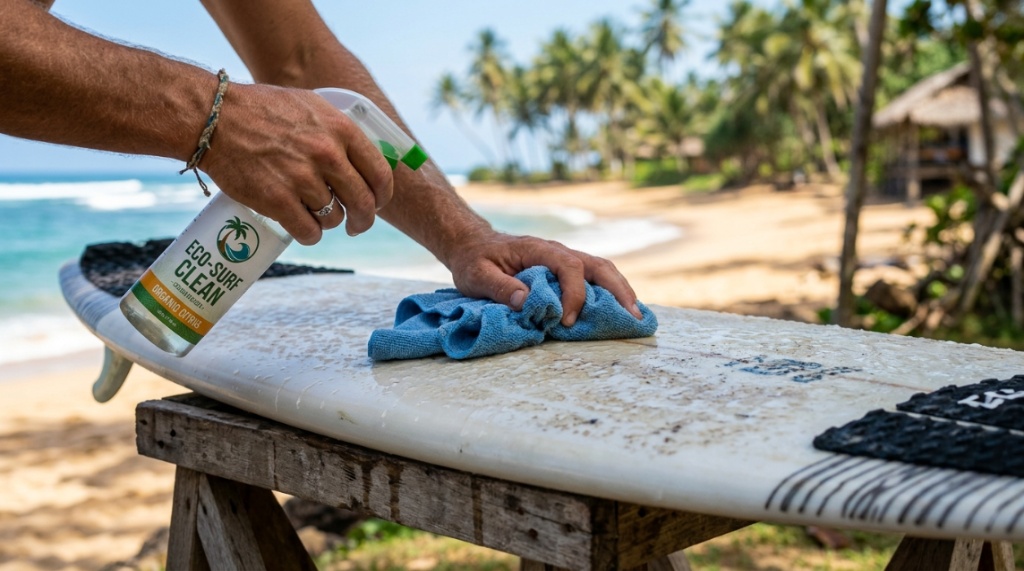
First, put on gloves and a mask. Wipe the board with a dry cloth to remove loose spores. Spray the affected area with hydrogen peroxide or undiluted white vinegar. Let it sit for five minutes. Scrub with a soft bristle brush (old toothbrush works great) to get into the texture of the pad and rail grooves. Rinse with fresh water and dry immediately with a microfiber towel. Repeat if any dark spots remain.
Sulfuric Acid and Commercial Board Cleaners
Surfboard-specific cleaners like “Board Cleaner” or “Surf Suds” are formulated to be gentle on glass and foam while being harsh on mold. They often contain mild acids that break down organic growth without damaging the board. Avoid using acetone or paint thinners—they will dissolve the resin and ruin the board’s structural integrity.
Can You Prevent Mold on a Surfboard With Wax and Traction Pads?
The Hidden Mold Trap Under Tail Pads
Traction pads (the sticky foam on the tail) are notorious mold magnets. Water gets trapped between the pad and the deck, and because the pad is opaque, you rarely notice mold until it spreads to the visible edges. Once a month, peel back the edge of the pad and check for black spots. You can lift the pad carefully, clean underneath, and re-stick it with a fresh adhesive sheet.
Wax and Wax Combs as Moisture Barriers
A fresh coat of wax does not prevent mold directly, but it creates a smooth surface that sheds water faster than bare resin. However, old, dirty wax with trapped sand and salt creates pockets for moisture to sit. Strip your wax completely every two months during the wet season. Use a wax comb and a citrus-based wax remover to get every residue off the board.
Anti-Microbial Wax and Finishes
Some specialty surf wax companies now offer anti-microbial formulas that contain silver ions or zinc compounds. These additives inhibit mold spore germination on the wax surface. While not 100 percent effective, they add an extra layer of protection when combined with proper drying and storage habits.
How Does Saltwater Versus Freshwater Affect Mold Growth?
Why Rinsing With Fresh Water Is Non-Negotiable
Saltwater alone does not cause mold. In fact, high salt concentrations can kill some fungi. However, once the saltwater dries on the board, it leaves a hygroscopic (water-attracting) salt layer. That salt pulls moisture from the humid air onto the board surface, creating a persistent wet film. This film is what feeds mold. Always rinse with fresh water to remove the salt layer before storage.
The Role of Ocean Bacteria and Biofilm
The ocean is full of organic matter—plankton, algae, bacteria, and fish slime. When you surf, this biofilm coats your board. As the board dries, this organic layer serves as a food source for mold. A simple fresh water rinse removes most of this biofilm. For deeper cleaning, use a mild dish soap solution once a month to break down the sticky residue.
When to Use a Diluted Bleach Rinse
If you have had a previous mold outbreak, add one tablespoon of bleach to one gallon of fresh water for your post-surf rinse. This kills spores on contact and sanitizes the board surface. Use this bleach rinse only once per week to avoid long-term resin damage. Always follow with a plain fresh water rinse to remove bleach residue.
Is It Safe to Store Surfboards in a Garage in Hawaii?
The Temperature and Humidity Challenge
Garages in Hawaii are usually uninsulated, unairconditioned, and have concrete floors. During the day, the temperature inside can hit 95°F. At night, it drops to 75°F. This swing causes condensation on every surface, including your board. A garage is the worst possible storage location unless you take drastic measures.
How to Garage-Proof Your Surfboard
If you must use a garage, create a microclimate. Install a small exhaust fan or a dehumidifier. Use a plastic pallet to keep the board six inches off the concrete floor. Cover the board with a breathable cloth sleeve (not a closed bag). You can also hang moisture-absorbing silica gel packets from the board rack to trap ambient humidity.
Alternative Storage Locations: Living Room or Lanai
A covered lanai (patio) with good airflow is often better than a garage, as long as it is shaded from direct sun. UV rays degrade resin quickly. A living room corner is actually the best indoor spot because it has consistent temperature and low humidity. Many Hawaiian surfers accept that boards become part of the home decor—a small price to pay for mold-free equipment.
Which Surfboard Materials Resist Mold the Best?
Epoxy vs. PU Foam
Epoxy resin is denser and less porous than polyester resin (PU). Mold has a harder time penetrating the surface of an epoxy board. However, epoxy boards can still grow mold on the surface if not dried properly. PU boards absorb moisture into the foam core, creating internal mold colonies that cause delamination. For Hawaii, epoxy boards are the more resilient choice, but they still require good hygiene.
Hollow Wooden Boards and Mold
Wooden surfboards (alaia or paipo) are naturally antimicrobial to some degree, but wood can rot if kept wet. The organic nature of wood makes it a food source for mold. If you ride a wooden board, you must oil the wood regularly with a tung oil or linseed oil finish to create a water-resistant barrier. Never leave a wet wooden board in a bag,Before storing your equipment long-term or tackling any maintenance, ensure Surfboard Stable During Repairs by working in a dry, well-lit space free from excess tropical humidity.
Soft-Top Boards: The Mold Magnets
Soft-top (foam) boards are the most mold-prone of all. The open-cell foam absorbs water like a paper towel, and the plastic skin often develops tears that let water into the core. If you own a soft-top, treat it as a high-maintenance board. Rinse, dry thoroughly, and store it in the driest part of your home. Replace it if the skin gets punctured.
How Often Should You Inspect Your Surfboard for Mold?
The Weekly Visual and Smell Check
Every Sunday, give your board a quick inspection. Look for black, green, or pink specks on the deck, rails, and tail pad. Smell the leash cup and fin boxes. If you detect a musty odor, treat immediately. Early mold is much easier to remove than a full-blown infestation that has penetrated the foam.
Seasonal Deep Clean Protocol
Every three months (or after a big swell season), do a full deep clean. Strip the wax, remove the fins, and scrub the entire board with hydrogen peroxide. Check the leash plug for hidden moisture. Lubricate the fin screws with a silicone spray to prevent corrosion. This seasonal maintenance extends the life of your board by years.
Signs of Internal Mold (Delamination)
If you see bubbles, soft spots, or discoloration that feels spongy, mold has likely gotten inside the foam. Internal mold is nearly impossible to remove without professional repair. The board may need to be opened up, cleaned, and re-glassed. Prevention is the only reliable cure for internal mold infestation.
Can Sunlight Kill Mold on a Surfboard?
UV Light as a Natural Mold Killer
Ultraviolet (UV) light kills mold spores effectively. Direct sunlight for 30 minutes will destroy most surface mold colonies. However, prolonged UV exposure degrades the resin, causing it to become brittle and yellow. The trick is to use short, controlled sunning sessions (15–20 minutes) and never leave the board in direct sun for hours.
The Shade-Drying Method
Instead of direct sun, dry your board in a spot that receives indirect sunlight or bright shade. This gives you UV benefits without the heat damage. A covered outdoor rack with a slatted roof or a spot under a tree works perfectly. The combination of UV, airflow, and shade is the ideal drying environment in Hawaii.
Artificial UV Lights for Garages
If you cannot get natural sunlight into your storage area, consider a small UV-C lamp (like those used for water purification). Run it in the room for 10–15 minutes while the boards are drying. Be careful—UV-C light is harmful to skin and eyes, so use it only when the room is empty. This kills airborne mold spores and sanitizes the board surface.
Frequently Asked Questions
Can I use vinegar to clean mold off my surfboard?
Yes, white vinegar is one of the safest and most effective mold killers for surfboards. Apply full-strength vinegar to the moldy area, let it sit for five minutes, scrub gently, and rinse with fresh water. It is mild enough not to damage resin but strong enough to kill most mold species.
How long does it take for mold to grow on a surfboard?
In Hawaii’s humid climate, visible mold can appear within 24 to 48 hours if the board is stored wet in a closed bag or dark room. Under ideal conditions (warm, damp, and dark), mold spores can germinate in as little as 12 hours.
Does surf wax prevent mold growth?
Surf wax does not prevent mold directly, but a smooth wax layer helps water sheet off the board, reducing the surface moisture that mold needs to grow. For best results, wax fresh and strip old wax every two months during the wet season.
Can you fix a surfboard that has mold inside the foam?
Internal mold (delamination with dark spots) is very difficult to fix at home. The damaged foam must be cut out, cleaned, and replaced with new foam, then re-glassed. It is often cheaper to buy a new board unless the board has high sentimental value.
Is it better to store a surfboard horizontally or vertically?
Vertical storage (nose up) is better for mold prevention because water drains away from the fins and leash cup. Horizontal storage allows water to pool on the deck and rails, creating persistent moisture that fuels mold growth.
What is the best surfboard storage rack for Hawaii?
The best rack keeps the board off the ground, allows air to circulate on all sides, and holds the board vertically. Look for freestanding racks with padded arms or wall racks that leave at least six inches of clearance from the floor.
Can I use a hair dryer to dry my surfboard faster?
Yes, but use the cool or low-heat setting. High heat can damage the resin and warp the foam. A cool hair dryer or a leaf blower (on low) is excellent for blowing water out of fin boxes and leash plugs after a rinse.
Conclusion
Mold in Hawaii is not a matter of if but when—unless you take proactive steps. The winning strategy is simple: always rinse with fresh water, dry thoroughly with a towel and airflow, store your board elevated in a ventilated spot, and inspect weekly. Use hydrogen peroxide or vinegar for cleaning, and avoid closed bags for wet storage. By making these actions a daily habit, you can keep your surfboard fresh, odor-free, and performing its best for years. Do not let mold ruin your next session. Take control of your storage environment today and enjoy the waves without worrying about what is growing on your deck.