

Finding a baby carrier that fits your body comfortably without breaking the bank can feel like an uphill battle. Many standard carriers are simply too short or too narrow, digging into shoulders and hips, making you dread wearing your little one. If you are searching for affordable plus-size baby carriers PA parents have tested and loved, you need solutions that prioritize both safety and style. This comprehensive guide breaks down exactly what to look for, which features matter most, and how to get a great fit while staying within your budget, all from a Pennsylvania perspective.
What Defines a Plus Size Baby Carrier?
A plus-size baby carrier is specifically designed to accommodate a larger torso, broader shoulders, and a wider waist, typically starting around a 40-inch waist or a 14-16 US dress size. Unlike standard carriers with fixed straps, these models use longer webbing, larger hip belts, and adjustable cross-straps to distribute weight evenly. This prevents the painful digging and pressure points that standard carriers cause, making extended wearing comfortable and safe for both caregiver and baby.
Key Measurement Points for a Perfect Fit
Before you start shopping, grab a soft measuring tape to get your exact dimensions. You need to measure your waist where the hip belt will sit (generally at your natural waist or just below your tummy) and your chest circumference for the shoulder straps. A good carrier will list these measurements in the product specifications, allowing you to check compatibility before purchase.
Why Standard Carriers Fail for Plus-Size Bodies
Standard carriers often have a maximum waist belt length of around 45 inches, which is not nearly enough for many plus-size parents. Additionally, the torso length is often too short, meaning the straps overcorrect the fit or sit too low on the shoulders, causing back pain. Recognizing these limitations helps you avoid wasted money and discomfort.
Weight Capacity vs. Size Capacity
It’s crucial to understand that weight capacity (how much the baby weighs) is separate from size capacity (how big the wearer can be). A carrier can hold a 40-pound child but still not fit a 2XL body. Always check the weight limit for the child and the maximum waist and chest measurements for the wearer to ensure you meet both criteria.
Which Carrier Styles Work Best for Larger Bodies?
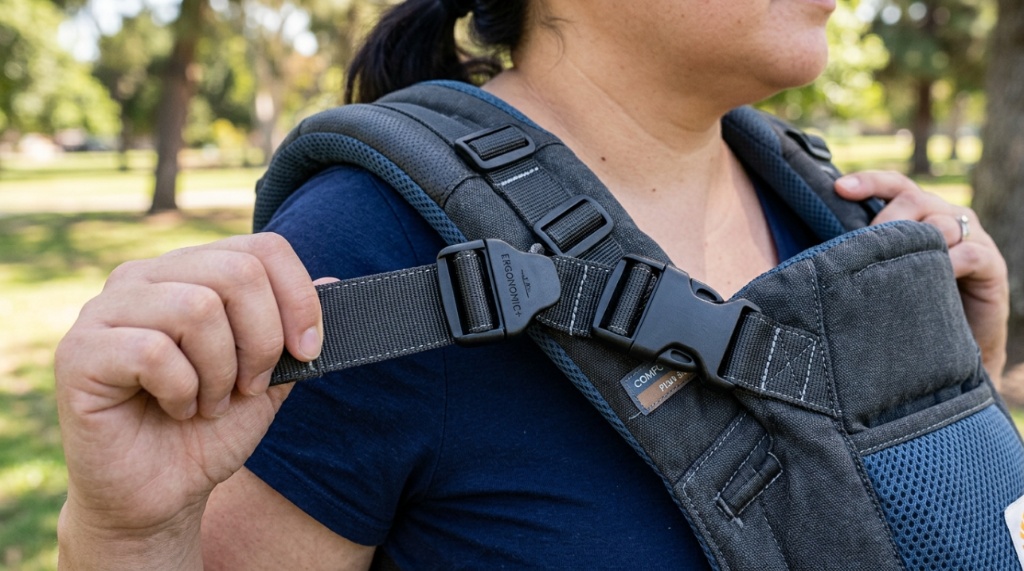
Structured buckle carriers and soft structured carriers (SSCs) are generally the most ergonomic and user-friendly choices for plus-size parents. They offer strong lumbar support and easy adjustability. Wraps can work but often require longer lengths (usually a size 7 or more) and a steeper learning curve, making buckles a more practical and affordable option for most.
Structured Buckle Carriers: Pros and Cons
These carriers are the gold standard for convenience with features like padded shoulder straps and a robust hip belt. The pros include quick on/off, no wrapping skills needed, and excellent weight distribution when adjusted properly. The cons can include a higher upfront cost for premium models, but budget-friendly versions with proper extended straps do exist.
Mei Tais and Half-Buckle Carriers
These offer a hybrid approach with a wrapped waist or wrap straps and a buckled waist. They are highly adjustable on the torso and waist but require a small learning curve for tying. For PA parents who want a custom fit without the bulk of a full wrap, these are an excellent, often affordable, option.
Ring Slings for Quick Errands
While not ideal for all-day wear, ring slings are great for quick trips and can be used with plus-size bodies if you purchase a longer length (e.g., 3.2 meters). However, they concentrate weight on one shoulder, which can become uncomfortable for heavier babies, so they are best used as a secondary carrier, not your main one.
How to Test a Carrier’s Fit Before Buying?
You cannot know if a carrier is right for you just by looking at a photo. The “try-before-you-buy” method is vital, especially for plus-size bodies. Many local baby stores in PA have sample carriers you can test with a weighted doll. Additionally, you should check for a long return policy if ordering online so you can test it at home with your real baby.
The “A” Frame Check for Hip Positioning
Once the carrier is on, check your baby’s legs. They should form an “M” shape with the knees higher than the bottom and the spine in a natural “C” curve. The fabric should support from the back of the knee to the top of the knee, not just the crotch. This ensures healthy hip development and comfort.
Signs of a Poor Fit: Shoulder and Waist Pain
If you feel the straps digging into your armpits or the waist belt riding up or slipping down, the carrier is not adjusted correctly or is simply too small. A proper fit ensures the weight is carried on your hips and upper back, not your shoulders. If it hurts after 10 minutes, it will be unbearable after an hour.
Adjustability Features That Matter Most
Look for carriers with an “H” or “X” back configuration that allows you to adjust the chest strap independently from the shoulder straps. A large, contoured waist belt with a robust buckle is also non-negotiable. These features offer a customized fit that changes as you move, providing all-day support.
Is an Expensive Carrier Always Better for Plus-Size?
No, price does not always equate to a better fit. While premium materials are nice, many affordable carriers offer the same essential adjustments. The key is to focus on the engineering—specifically the strap length and width—rather than the brand name. You can often find a budget-friendly carrier that fits better than a fancy flagship model,If you are shopping for expectant parents or building a baby registry, pairing an ergonomic carrier with other great gifts for a newborn ensures they have everything they need for comfort and bonding from day one.
Budget-Friendly Brands That Cater to Plus-Size
Brands like Tula (with their “Toddler” and “Standard” sizes), Infantino (specifically the 4-in-1 with long straps), and Ergobaby (the All-Position 360 has great adjustability) offer models that extend beyond standard sizes. However, always double-check the specific size chart for each model, as even within a brand, sizes vary.
When to Invest in a Premium Model
If you plan to wear your baby for many hours a day, hike, or have a very heavy toddler, investing in a carrier with more padding and better fabric is worth the money. Look for features like lumbar support pillows and breathable mesh for PA summers. These add comfort but are not necessary for occasional users.
Where to Find Deals on Carriers in PA
Check local Facebook Marketplace, Buy Nothing groups, and consignment shops like Once Upon a Child. Because babies grow quickly, many carriers are sold gently used at a fraction of the cost. This is an excellent way to secure a high-end carrier for an affordable price.
What Features Help with Weight Distribution for Plus Size?
Weight distribution is the most critical factor for plus-size comfort. A wide, padded waist belt is essential; it should be at least 4-5 inches wide to spread the baby’s weight across your hips. Additionally, thick, contoured shoulder straps that do not slip off are crucial for preventing neck and upper back strain.
Why a Firm Waistband Makes a Difference
A soft, flimsy waistband will roll down and dig into your belly. Look for a waistband that is structured and stiff enough to hold its shape when cinched. This stiffness prevents the belt from digging into your internal organs and instead rests on the top of your hips.
The Role of a Chest Clip in Comfort
A chest clip (the clip that connects the shoulder straps across your back) is non-negotiable for plus-size parents. It stabilizes the straps, preventing them from sliding off your shoulders and forcing you to hunch. Adjusting this clip to sit at the middle of your back, not your neck, is key to a good fit.
Understanding Webbing and Strap Quality
The webbing fabric should be strong and non-stretchable. Stretchy straps will sag over time and cause back pain. Check the stitching and the strength of the buckles. You want thick, industrial-grade plastic buckles that click securely and do not feel flimsy.
Can You Use a Carrier with a C-Section or Tender Belly?
Yes, but you must choose a carrier that prevents pressure on your incision area. Look for a carrier with an “X” or “H” back configuration that pulls the weight away from the front. Additionally, consider wearing the waist belt higher, above your belly button, or lower, below the incision, to avoid irritation.
Front-Wrap vs. Back-Wrap Techniques
If you have a tender abdomen, the front wrap position can be uncomfortable. Learning to back-carry once your baby has great head and neck control is a game-changer. This shifts the weight entirely away from your front, making it much more comfortable for longer periods, especially for older infants.
Postpartum Recovery and Ergonomics
Your body is different even after delivery. The abdominal muscles are stretched, and posture changes. A good carrier supports your core and encourages you to stand tall. Avoid carriers that make you lean back to balance the weight, which strains your lower back.
Listening to Your Body’s Signals
Never push through pain. If a carrier causes discomfort, remove your baby immediately. Adjust the straps, or try a different position. Chronic pain can lead to long-term injury, so prioritize your physical health just as much as your baby’s.
How to Choose the Right Carrier for Different Baby Ages?
Age matters. For newborns, you need a carrier that allows for a narrow seat (but still M-shape) and provides head support. For older babies, you need a wider seat to accommodate growing hips and longer legs. Many carriers have adjustable seat widths, making them a versatile investment.
Newborns and “Newbornness” Feature
Look for a carrier with a newborn insert or an adjustable narrow seat. This ensures your tiny baby is safe and snug. An ill-fitting carrier can restrict breathing, so this is not just a comfort issue but a safety one. Never force a small baby into a seat that is too wide.
Toddlers: Moving to a Wide Seat
As your baby grows, you will need to widen the seat base. A narrow seat for a toddler will cause discomfort and hip problems. Carriers that extend the seat and have a higher weight limit (25-45 lbs) are perfect for wearing your toddler without dropping a hefty sum on a second carrier.
When to Transition to a Back Carry
Around 6-12 months, when your baby has sturdy neck control, transitioning to a back carry is easier on your body. It allows you to see what they are doing and free up your front. For plus-size parents, a back carry is often more comfortable than a front carry for long durations.
Can You Get a Custom Carrier in PA?
Yes, several small businesses and WAHM (work-at-home mom) shops in Pennsylvania offer custom carriers. They can make a strap exactly to your measurements, ensuring a perfect fit. While this might be pricier than standard retail, it eliminates the guesswork and provides a bespoke solution tailored to your unique body.
Local Retailers vs. Online Shopping
Local shops offer the benefit of trying before buying, but their inventory can be limited. Online shopping offers more variety, especially for extended strap options. For the best result, check online sizes, cross-reference with your measurements, and purchase from stores with generous return policies. For a curated list of the best budget-friendly models that work well, you can explore this link for affordable plus-size baby carriers PA.
Understanding the Cost of Custom vs. Universal
A custom carrier can cost anywhere from $200 to $400. A universal carrier with extended straps costs between $80 and $150. If you are on a tight budget, start with the universal option. Only invest in custom if you find that universal models still don’t meet your needs after multiple adjustments.
Reading Reviews from Other Plus Size Parents
Do not rely on the average 5-star review. Type “plus size” in the search bar of the review section. Read what parents with similar stats to yours say about hip fit and strap length. Their insights are more valuable than a generic recommendation from a fashion blogger.
Why Do Some Carriers Cause Back Pain and How Do You Fix It?
Back pain usually stems from a poor fit, not the carrier itself. If the waist belt is tilted forward or the shoulder straps are too wide, your body compensates by arching your back. Fix this by tightening the straps one by one, layer by layer, while looking in a mirror.
Step-by-Step Adjustment Guide
Step 1: Put on the carrier and buckle the waist belt. Tighten it until it is snug.
Step 2: Have someone place your baby in the seat. Step 3: Tighten the shoulder straps until the baby is tight against your chest. Step 4: Clip the chest strap at the mid-back. Step 5: Tighten the chest strap to pull the shoulder straps closer to your neck. Step 6: Check that the baby’s face is visible and you can kiss their head.
Strengthening Exercises to Reduce Pain
Even with a perfect carrier, wearing a baby is a workout. Strengthening your core and upper back muscles helps prevent pain. Simple stretches like doorway Pectoral stretches and shoulder blade squeezes can make a huge difference in your comfort level.
Common Mistakes: Too Loose or Too Tight
Wearing the carrier too loose causes the baby to sag and pull on your lower back. Wearing it too tight restricts your breathing. The ideal fit is snug but not restrictive. You should be able to slip a closed fist between your body and the carrier’s top edge.
What Is the Best Way to Wash and Maintain a Carrier?
A clean carrier is a safe carrier. Always check the label, but most carriers are machine washable in cold water with a mild detergent. Never use fabric softener, as it breaks down the fibers and can damage the buckles. Air drying is always preferred over the dryer to prevent shrinkage.
Hand Washing Essentials for Premium Materials
If you have a linen or wool carrier, hand washing is necessary. Use a gentle soap like Woolite and cool water. Gently squeeze the fabric and lay it to dry. Improper washing can void the warranty, so always read the care tag first.
Drying and Storage Tips
Hang your carrier to dry in a shaded area to prevent UV damage. Once dry, store it away from dust and sunlight in a cotton bag. Avoid crushing it under heavy objects that might bend the buckles or distort the foam inside the waist belt.
When to Replace Your Carrier
If you notice fraying straps, cracked buckles, or any broken stitching, your carrier is past its safe life. Do not attempt to repair it yourself unless you are a professional seamstress. A broken carrier can lead to a serious fall. Replace it even if it was expensive.
Is Secondhand a Smart Choice for Plus-Size Carriers?
Yes, buying second-hand is highly recommended. Because this is a niche market, many used carriers are barely used. You can often find high-end models for under $50. Just be diligent about checking the product’s manufacturing date and safety requirements, which are typically printed on a label.
Where to Find Used Carriers Safely
Look for local “Babywearing BST” (Buy Sell Trade) groups on Facebook or dedicated forums like The Babywearer. These communities usually have strict rules about age and condition. Buying from a parent who also wears plus sizes ensures you get an honest assessment of the fit.
What to Inspect Before Buying Used
Check the foam in the waistbelt for cracks. Fold the waistband to see if the foam has creased and broken. Test all buckles. Look at the stitching around the straps and the seat. If anything looks off, walk away. Safety is more important than a bargain.
Final Checklist Before You Click Buy
Before your final purchase, compile a checklist. This ensures you are making a wise investment that will last. This includes checking your measurements, understanding the carrier’s weight limit, and confirming the return policy. Ask yourself if the carrier offers the specific adjustments you need.
Quick Reference: 5 Non-Negotiables
- Extended Waist Belt: Must be at least 60 inches long.
- Contoured Padded Straps: At least 2 inches thick.
- Adjustable Seat Width: To grow with your baby.
- Strong Buckles: Metal or heavy-duty plastic.
- Breathable Fabric: To prevent overheating.
If a carrier misses any of these, it’s probably not the right one for you, no matter the price.
Frequently Asked Questions
Are there affordable plus-size baby carriers in PA that don’t sacrifice quality?
Yes, absolutely. Many brands offer extended sizes that are affordable. Focus on functional features like a wide waistband and long straps rather than fancy patterns. Budget models from brands like Infantino and Evenflo offer surprising quality for the price, though you must verify their specific sizing.
Can I use a standard size carrier if I am a size 18/20?
It depends on the brand. Some standard carriers fit up to size 22, but many do not. Check the maximum waist measurement, not just the dress size. If the waist measurement is under your actual measurement, the carrier is too small and will be uncomfortable, even if you can just barely buckle it.
What is the best carrier position for a plus-size parent?
For plus-size parents, a back carry is often the most comfortable for extended periods as it distributes weight across the back and hips, away from an overlapping belly. However, a front carry is fine for shorter periods. Always ensure the baby is high enough to kiss and has a clear airway.
How do I know if the carrier fits my baby correctly?
Your baby’s knees should be higher than their bottom (the M-position), and their back should be gently curved. The fabric should support from knee to knee. A simple test is to look in a mirror—your baby should look comfortable, not like they are in a hammock, and should be able to breathe freely.
Can I breastfeed in a plus-size carrier?
Yes, but it takes practice. Lower the baby to your breast level (which might require adjusting the shoulder straps), and use the carrier’s hood to provide privacy. It is crucial to keep the baby’s airway clear and your hand nearby until you are confident in the latch.
Are wraps safer than buckle carriers for plus-size parents?
Neither is inherently safer; it depends on your skill and fit. Wraps offer the most custom fit but require learning to tie them correctly. Buckle carriers are easier to use quickly. Safety depends on keeping the baby snug, visible, and able to breathe, not on the style.
Where can I get help with a career fit in PA?
Look for local babywearing groups in cities like Pittsburgh, Philadelphia, or Harrisburg. These groups often host “Babywearing 101” workshops where you can get one-on-one help. Retail stores like Buy Buy Baby (if still open) or specialty baby boutiques often have trained staff as well.
Conclusion
Choosing the right carrier as a plus-size parent shouldn’t be a source of stress. By focusing on specific measurements like waist and chest size, prioritizing adjustable features like a firm waistband and chest clip, and considering your budget, you can find a carrier that works beautifully. Always remember that a comfortable carrier means a happy baby and a happier parent, enabling you to explore everything Pennsylvania has to offer hands-free. Start your search with clear parameters and don’t settle until you find that perfect fit.
